
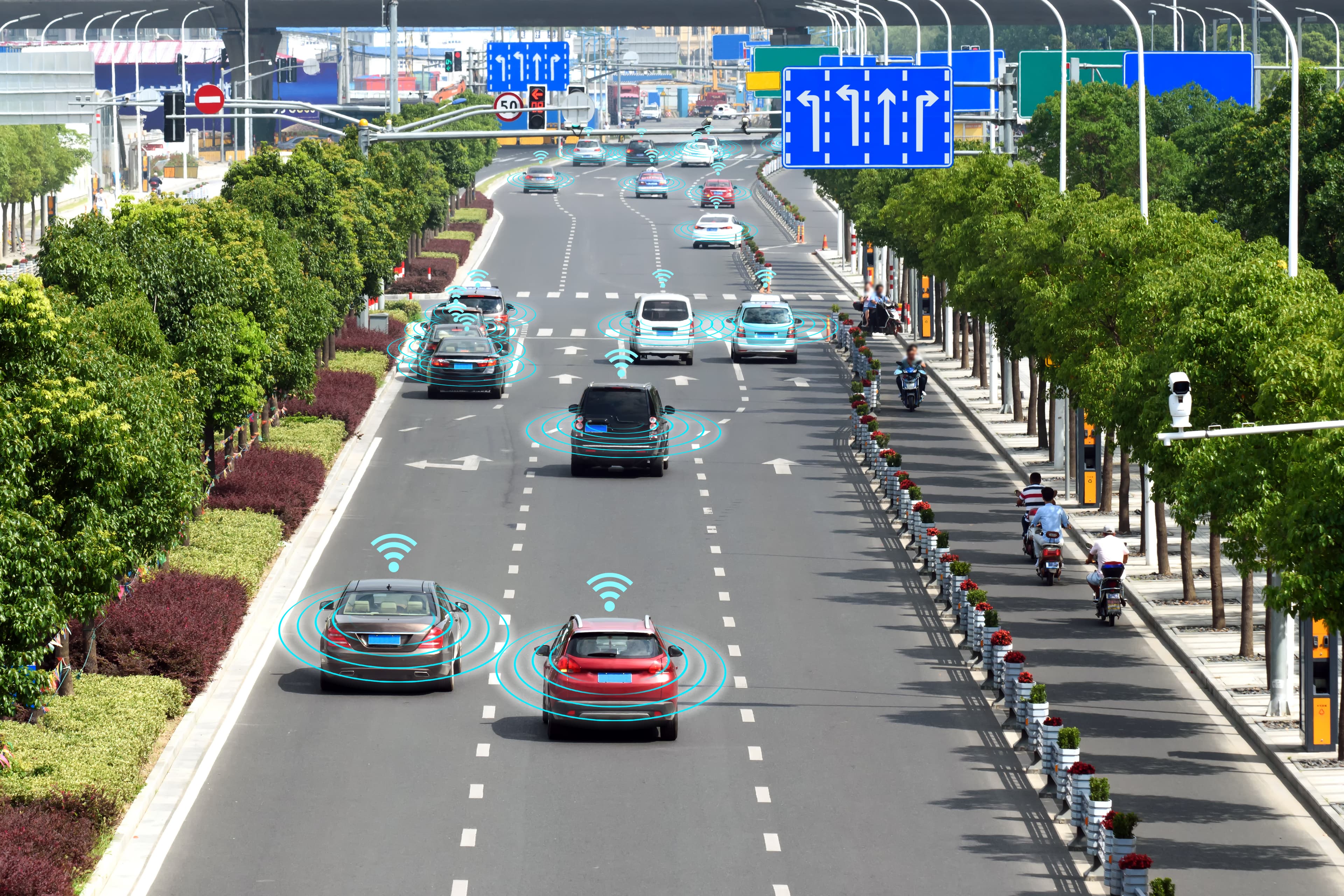
Over the last several years, the
auto industry has begun developing cars with high-tech capabilities,
particularly in the realm of electric and autonomous vehicles (EV/AV). With the
emergence of technology companies in this sector, the rate of innovation has
rapidly increased. These firms are developing cutting edge vehicle autonomy
system and battery technology and deploying it on their automobiles. As a
result, traditional car companies are being forced to adapt, and the race to
vehicle autonomy is on.
2020 has been an interesting year, to say the least. The pandemic has brought upon a number of challenges to people, leading to a considerable amount of stress and uncertainty. Investors have become more risk-averse, companies are looking at areas to cut costs, and consumers are reluctant to spend money.
Even with all the challenges
presented in 2020, the race to vehicle autonomy has not slowed. According to [this
recent report](https://www.globenewswire.com/news-release/2020/10/01/2102335/0/en/Autonomous-Vehicle-Market-will-Garner-Growth-63-5-by-2027.html), the AV market is projected to grow almost 65% by 2027.
Corporations such as Alphabet and Baidu already have vehicles on the road being
deployed and tested. OEMs such as Ford, GM, and Volkswagen have made
considerable progress in the AV space through acquiring subsidiary companies
and committing billions of dollars in R&D. Consumers are already seeing
cars on the road with several autonomous capabilities within highway settings
(with the presence of a human driver). Clearly, the major players in the car
industry are persevering through the grim hand that was dealt by this
tumultuous year.
Although that the race to autonomy
is showing no signs of stopping, the industry has reached a crossroads. Given
that we are currently in an era of enabling highway autonomy, the next logical
step in the race is urban self-driving, a scenario with many complexities
including pedestrians, traffic light detection, and varying speeds. Emerging
technology firms recognize this and are developing high end AV technology onto
their cars at a much faster than traditional OEMs. As a result, conventional
car companies are scrambling to find a way to adapt with the evolving market to
stay competitive in the long run.
Delving into the crux of the issue
the incumbent solutions found in cars produced by these companies cannot
enable anything past the partially autonomous capabilities we see today. These
platforms are based on legacy technology, such as the GPU – they are not
purpose-built for autonomous vehicles. Due to these technological constraints,
a novel solution must come to the market in 2021 to facilitate the efforts of
OEMs amidst the race to vehicle autonomy.
Looking at highway autonomy – although significant progress has been made, there are still constraints within on/off ramps that are unsolved. Revisiting the previous blog post related to “Technology-first automobiles” – these types of vehicles are going to solve problems on all road settings (highway, urban, country etc…). These cars will be equipped with a platform that will deliver high-level accuracy in real-time. We @ Recogni are developing such a solution. With unmatched capabilities (100 TOPS per watt), we can enable “tech-first” automobiles and facilitate OEMs to be profitable and sustainable in the long run of this constantly-evolving industry.
To learn more about Recogni, check out www.recogni.com
By Sidhart Krishnamurthi, Product Management @ Recogni