
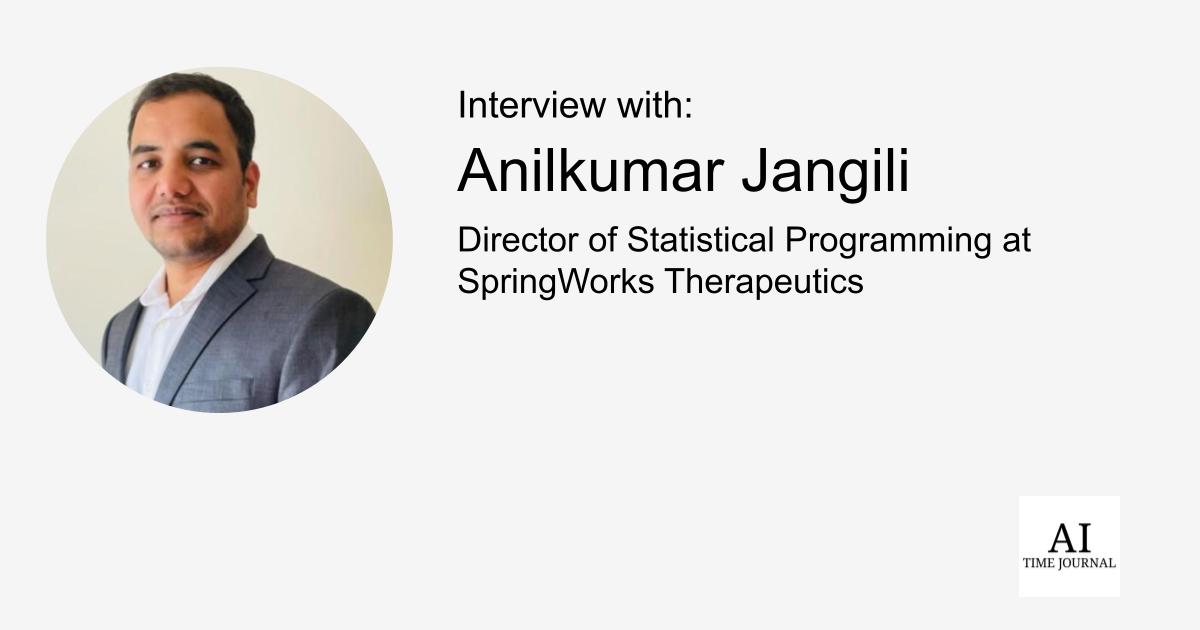
In this interview, Anilkumar Jangili, Director of Statistical Programming at SpringWorks Therapeutics, offers insights into the critical role of data in clinical research. With over 14 years of experience, he discusses balancing technical and leadership responsibilities, integrating AI into trials, and ensuring compliance. Anil also shares lessons from his roles as an advisor and peer reviewer, offering advice for future leaders in data science and analytics.
Explore more interviews like this here: Keaun Amani, Founder & Chief Executive Officer at Neurosnap Inc. – Leading the Integration of Software Engineering and Molecular Biology: Transforming Bioluminescent Challenges into Breakthroughs with AI
What inspired your journey into statistical programming, and how has your perspective on the field evolved over the years?
My journey into statistical programming was inspired by a deep-seated passion for data and its potential to drive meaningful change in healthcare and the Pharmaceutical Industry. In high school, I was always fascinated by the research that goes into getting new drugs to the market, which led me to pursue a degree in the pharmaceutical field. My initial exposure to data analysis came during my academic training, where I learned how to manipulate data and perform complex analyses. I was particularly drawn to the technical aspects of programming and the challenge of transforming raw data into actionable insights that could inform clinical decisions.
Over the 14+ years of my career, my perspective has evolved significantly. I began to recognize that statistical programming is not just about crunching numbers; it plays a critical role in patient outcomes and the overall success of clinical trials. I now see it as a blend of science, technology, and collaboration. The ability to communicate findings effectively to non-technical stakeholders has become just as important as technical skills. I have learned that fostering a collaborative environment, where diverse perspectives are valued, leads to more innovative solutions and ultimately better patient care.
How do you balance the technical demands of statistical programming with the leadership responsibilities of managing diverse teams?
Balancing technical demands with leadership responsibilities requires a strategic approach. I prioritize open communication and foster a collaborative environment where team members feel empowered to share their ideas and challenges. I believe that a strong team dynamic is essential for success, so I encourage regular brainstorming sessions and knowledge-sharing workshops.
By delegating tasks based on individual strengths and providing mentorship, I ensure that technical work is executed efficiently while also nurturing the professional growth of my team. I make it a point to recognize and celebrate individual contributions, which boosts morale and encourages a sense of ownership among team members. Regular check-ins and feedback sessions help me stay connected with both the technical and interpersonal aspects of my role, allowing me to address any concerns promptly and keep the team aligned with our goals. On LinkedIn, I regularly provide my insights about leadership and managing diverse teams, and LinkedIn honored me with a top leadership batch for my contributions.
What trends in AI and automation do you believe are most transformative for the pharmaceutical and biotechnology industries?
AI and automation are revolutionizing the pharmaceutical and biotechnology industries by enhancing data analysis, improving patient recruitment, and streamlining regulatory submissions. The use of machine learning algorithms to predict patient outcomes and optimize trial designs is particularly transformative. For instance, AI can analyze historical trial data to identify the most suitable patient populations, thereby increasing the likelihood of successful outcomes.
In my presentation at Pharmaceutical Users Software Exchange (PHUSE) which is a renowned Industry experts conference I presented about"Integration of AI Into the Clinical Trial Submission Process Is Not Just a Trend”, where I presented about automation in data collection and reporting processes reduces human error and accelerates timelines, allowing for faster decision-making and more efficient drug development. Technologies such as natural language processing are also being utilized to extract insights from unstructured data sources, further enriching the data landscape. Overall, these advancements are enabling more personalized medicine approaches and improving the overall efficiency of clinical trials.
How do you approach maintaining compliance with CDISC standards and GCP guidelines while driving innovation in clinical research?
Maintaining compliance with CDISC standards and Good Clinical Practice (GCP) guidelines is paramount in my work. I approach this by integrating compliance into the early stages of project planning, ensuring that all team members are trained and aware of the standards. I conduct regular training sessions and workshops to keep the team updated on any changes in regulations and best practices.
I also advocate for the use of innovative tools and technologies such as Pinnacle 21 Enterprise that enhance compliance without stifling creativity. For example, in my current role I implemented automated validation checks that helped to ensure data integrity while allowing team members to focus on more complex analyses. Regular audits and quality checks are implemented to ensure adherence while fostering a culture of continuous improvement and innovation. This proactive approach not only mitigates risks but also encourages a mindset of excellence within the team.
Can you share a specific project or challenge that highlighted the critical role of statistical programming in advancing clinical trials?
One significant project was the regulatory submission for a rare disease. The key was to ensure that our statistical analyses met the rigorous standards required for FDA approval. My team and I developed a comprehensive analysis plan that not only adhered to regulatory guidelines but also provided clear insights into the drug's efficacy and safety.
Throughout the project, we employed advanced statistical techniques and analyses, and we were able to address issues and present a robust case for the drug's approval. This project underscored the critical role of statistical programming in translating complex data into compelling narratives that support clinical decision-making. The successful approval of the drug was a testament to the power of statistical programming in advancing clinical research and ultimately improving patient outcomes.
How do you foresee the integration of AI shaping the future of statistical programming in regulatory submissions?
The integration of AI will significantly enhance the efficiency and accuracy of statistical programming in regulatory submissions. AI can automate routine tasks, such as data cleaning and preliminary analysis, allowing programmers to focus on more complex analytical challenges. This shift will not only improve productivity but also reduce the likelihood of human error.
In my scholarly article, titled “Revolutionizing Clinical Trials through Data Science and Statistics”, I presented about how the rapidly evolving landscape of data science, statistical methodologies are pivotal in shaping the future across diverse domains. From artificial intelligence (AI) and machine learning to bioinformatics and clinical trials, the application of statistics is instrumental in extracting meaningful insights from large and complex datasets. In contemporary society, data has emerged as the cornerstone of innovation, driving advancements in various fields.
Additionally, AI-driven predictive analytics can provide deeper insights into trial outcomes, helping to shape more effective submission strategies. For example, AI can analyze historical submission data to identify patterns that lead to successful approvals, guiding teams in their approach. As AI continues to evolve, I believe it will become an indispensable tool in our toolkit, enabling us to deliver high-quality submissions more rapidly and with greater confidence.
What is the most significant lesson you’ve learned as a peer reviewer and judge in the clinical research community?
The most significant lesson I've learned is the importance of constructive feedback and collaboration. As a peer reviewer for prestigious journals and judges, I’ve seen firsthand how diverse perspectives can enhance the quality of research. It’s crucial to approach reviews with an open mind and a focus on improvement rather than criticism. This mindset fosters a culture of learning and innovation, ultimately benefiting the entire clinical research community. As a peer reviewer for prestigious journals
I have also learned the value of mentorship in this role. By providing guidance and support to emerging researchers, I can help them navigate the complexities of clinical research and statistical programming. This not only strengthens the community but also ensures that we are continuously cultivating the next generation of leaders in the field.
How has your work as an industry advisor influenced your perspective on education and training in statistical programming?
My role as an industry advisor at Eastern Carolina University has reinforced the need for continuous education and training in statistical programming and Data Science. The field is constantly evolving, and staying updated with the latest tools, technologies, and methodologies is essential. I advocate for educational programs that emphasize practical experience and real-world applications, ensuring that aspiring data scientists are well-equipped to meet industry demands.
Collaboration with academic institutions is vital to bridge the gap between theory and practice. I actively participate in curriculum development and guest lectures, sharing insights from my industry experience to enrich students' learning.
I recently participated in the Career and Technology Panel, where I had the opportunity to present to an engaged audience of over 70 students and faculty members. I shared valuable career advice and discussed emerging technology trends. This experience provided significant exposure and allowed me to network with professionals, making it a great opportunity for my professional growth. Additionally, I encourage ongoing professional development for current practitioners, emphasizing the importance of lifelong learning in a rapidly changing field.
What advice would you offer to professionals aspiring to leadership roles in data science and analytics?
My advice would be to cultivate a blend of technical expertise and soft skills. While technical proficiency is crucial, effective leadership also requires strong communication, empathy, and the ability to inspire and motivate teams. Seek mentorship and be open to learning from others, as diverse experiences can provide valuable insights.
In my recent article on LinkedIn, titled, “Growing as a Leader in Statistical Programming in the Pharmaceutical Industry” which received significant impressions and reactions from the industry experts where I gave my insights about growing as a leader in statistical programming within the pharmaceutical industry requires a combination of technical expertise, effective communication, and a commitment to fostering innovation. By continuously developing your skills, embracing change, and building strong relationships, you can enhance your leadership capabilities and make a significant impact in your organization.
Networking is also essential; building relationships within the industry can open doors to new opportunities and collaborations. Finally, embrace challenges as opportunities for growth, and always strive for continuous improvement in both your technical and leadership capabilities. Being adaptable and open to change will serve you well in this dynamic field.
What motivates you to contribute to the clinical research community continuously, and how do you measure success in your career?
I am motivated by the profound impact that clinical research can have on patient lives. Knowing that my work contributes to the development of innovative therapies that can improve health outcomes drives my passion for this field. I find fulfillment in being part of a community that is dedicated to advancing science and improving healthcare. I feel honored that my contributions have been acknowledged through various awards, including the Claro Gold Award for Data Analytics, the Global Recognition Award (GRA), the 40 Under 40 Data Scientist Awards, the SpringWorks Go-Getter Award, and the OnCon Data & Analytics Professional Award. These accolades inspire me to further my efforts in delivering life-changing therapies to those in need.
I measure success not only by the achievements and accolades I receive but also by the positive changes I can affect in my team and the broader community. Seeing my colleagues grow and succeed, as well as the tangible benefits of our research on patients, is the ultimate measure of success for me. Additionally, I take pride in fostering a culture of collaboration and innovation, where everyone feels valued and empowered to contribute to our shared mission.