
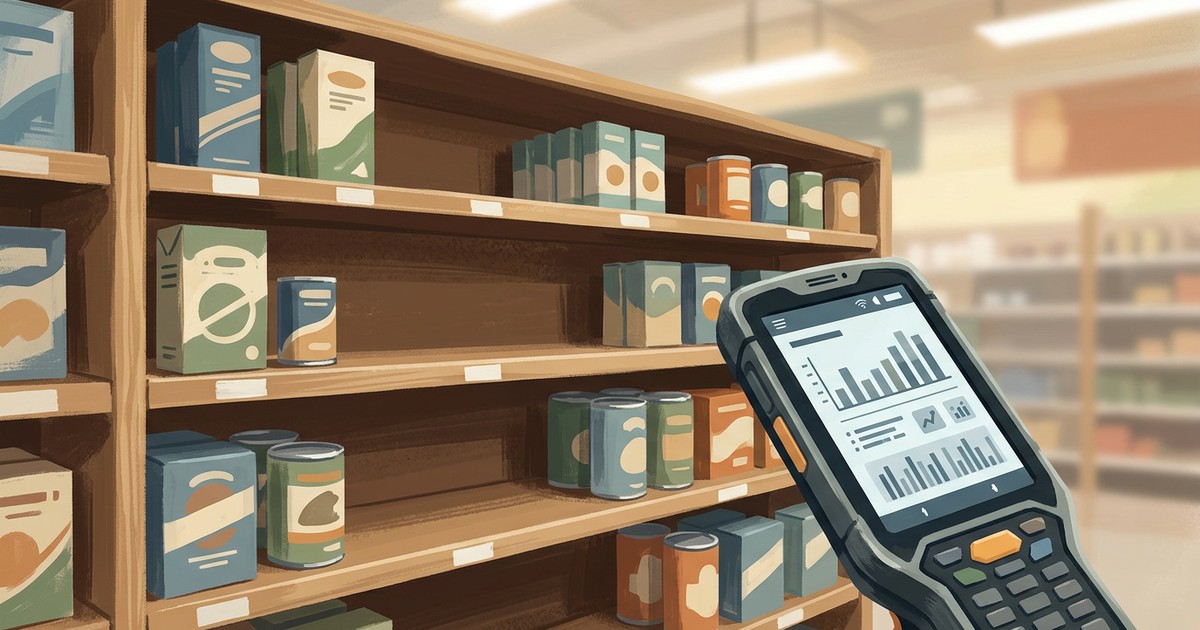
Stockout alerts become useful when retailers can distinguish a supply shortage from a shelf problem or an unreliable record.
Suppose a store's inventory report shows six jars of coffee, but the shelf is empty. Sales have stopped. A forecasting model that treats the stock record as reliable may read that silence as weak demand.
The next action depends on where those six jars are. If they are in the back room, someone needs to refill the shelf. If they cannot be found, the stock record needs correcting. If the feed is simply late, another order could compound an error.
Before a retailer lets AI act on a stockout signal, it needs to distinguish those situations. That starts with the meaning, timing and reliability of the underlying records.
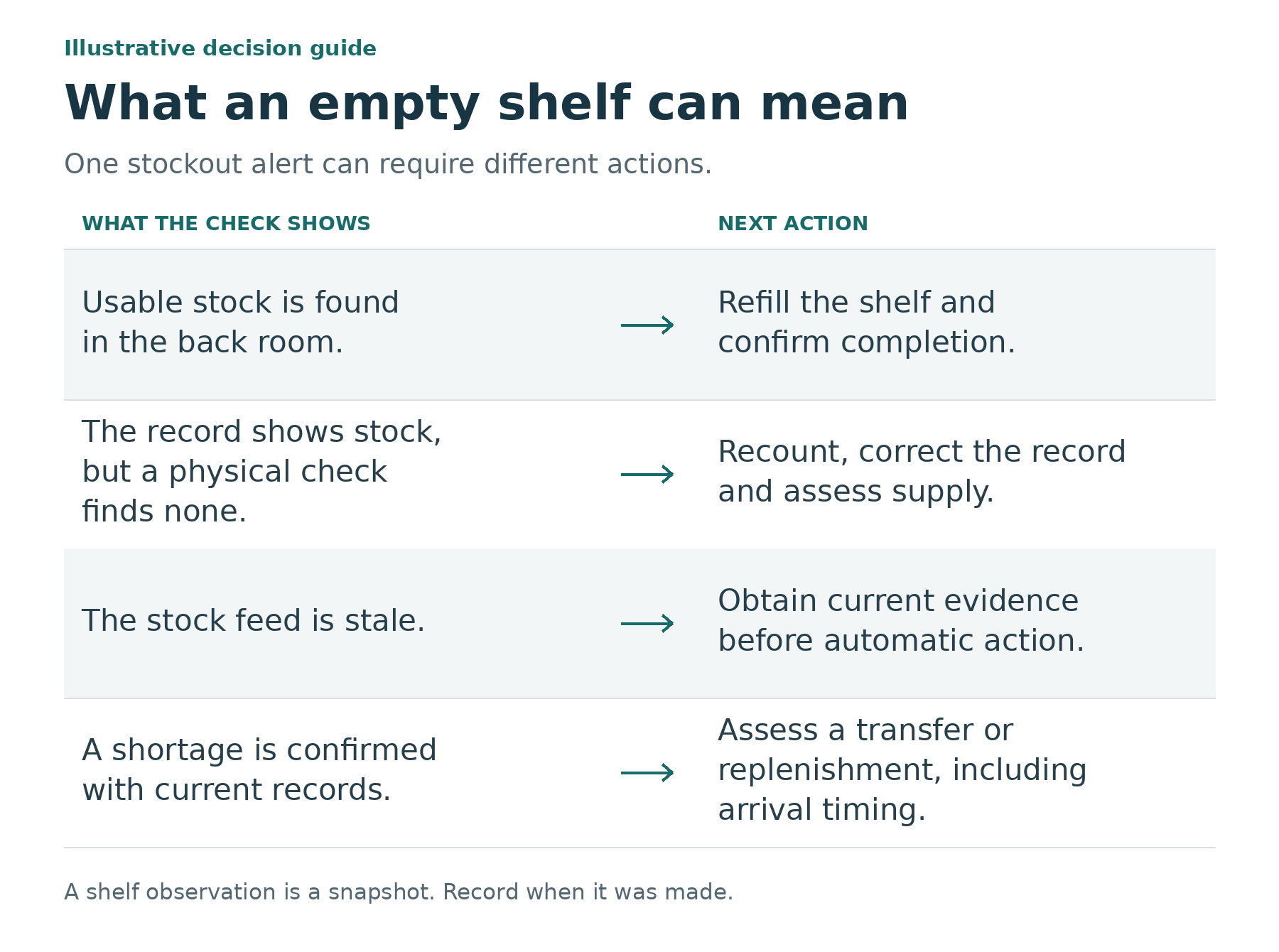
Figure 1. An empty shelf can require a store task, an inventory correction, a fresh check or a supply decision. Confirm the cause before deciding what happens next. Illustrative decision guide.
Decide what stockout means
An empty shelf, a zero inventory balance and an unavailable online listing describe different conditions. A product may exist in the building but be damaged, reserved for another customer or waiting to be put away. A company-wide stock total cannot establish whether a shopper can buy it at a particular store.
Define availability for the decision being made. A shelf-filling task needs evidence about the shelf and accessible back-room stock. A delivery promise needs sellable units that can reach the customer on time. A purchase order also needs incoming deliveries, existing commitments and supplier lead times.
Keep those fields separate. When a dashboard compresses them into one green "in stock" label, the person reviewing an alert loses the information needed to choose an action.
There is a practical ownership question here, too. Who can correct the record, who moves the product, and who can authorize a purchase? Sending every exception to the buyer creates a queue of problems that buying more stock may never solve.
Do not mistake a stockout for weak demand
Recorded sales show what customers managed to buy. They do not reveal every purchase that would have happened if the product had remained available. Adam J. Mersereau's research on demand estimation examines this problem and shows how ignoring inventory uncertainty can bias demand estimates downward under the study's assumptions. [1]
Consider two stores, each selling ten units on Saturday. In this illustrative example, one had stock throughout opening hours; the other ran out at noon. Ten is the observed sales figure for both. It is not enough information to conclude that demand was equal.
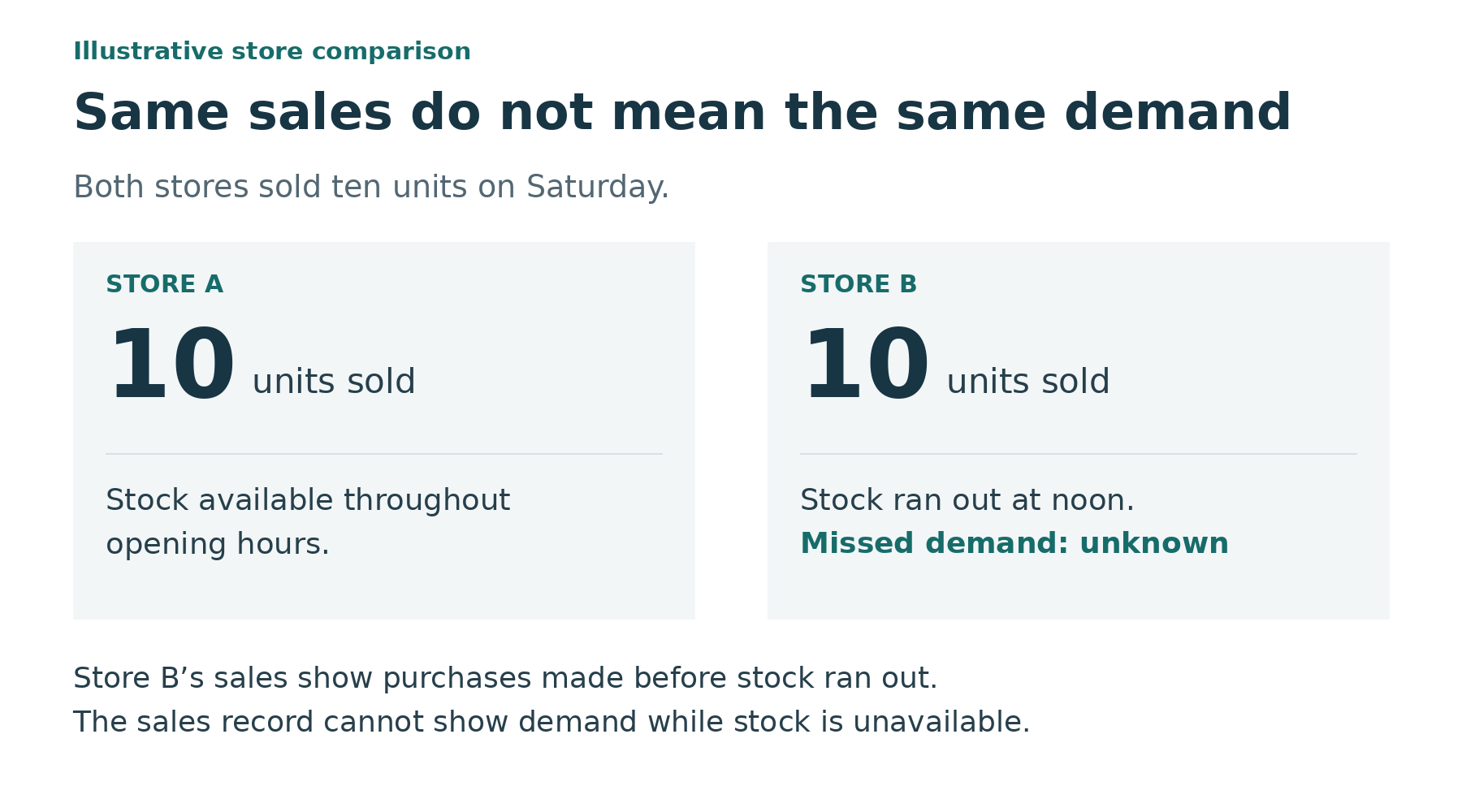
Figure 2. Both stores recorded ten sales. Store B ran out at noon, leaving its additional demand unknown. Matching sales totals do not establish matching demand. Illustrative example.
Record when availability was last confirmed and when a gap was detected. If checks are intermittent, preserve that uncertainty rather than inventing an exact stockout time. Keep actual sales, availability observations and any estimated missed demand in separate fields.
The same care applies to returns. Twelve purchases and two returns produce ten net units, but that total conceals two different events. Keep the purchase and return dates, and identify when a returned item becomes sellable again. A refund should not silently create available inventory.
What a physical check changes
Schnucks provides a concrete example. In an August 2021 expansion announcement, the grocer and Simbe described Tally robots checking store shelves up to three times a day, with inventory information feeding Schnucks' automated replenishment system. The partners reported a 20–30 percent reduction in out-of-stock items. That figure is their reported outcome; the announcement does not isolate the effect of each process change. [2]
The useful operational detail is the connection between observing a shelf and deciding what happens next. A scan is still a snapshot. A fast-selling item can disappear between passes, so the observation time belongs beside the alert. Teams also need to record whether someone found stock, refilled the shelf or confirmed a genuine shortage.
AI can help collect that evidence. In AI Time Journal's 2024 interview with Gather AI co-founder Sankalp Arora, he described drones gathering warehouse images that software uses to read labels, count boxes and help teams identify inventory exceptions. He also discussed practical difficulties including lighting and inconsistent labels. [3]
That distinction matters when planning an AI project. Checking what is physically present and predicting what customers will want are separate tasks. Each needs its own validation, and uncertain observations should remain visible to the people making replenishment decisions.
Make the alert traceable
Start with a small set of fields the store team and data team can both explain. Every alert should identify the product variant, location, selling channel and unit of measure. A case of twelve and a single unit cannot share an unqualified quantity field.
Keep the event time alongside the time the data arrived. A midnight upload containing yesterday afternoon's count is already old when the morning ordering run starts. Decide how stale each input can be before the system requires a fresh check. Fast-moving products may need a different rule from slow sellers.
Reconcile the stock balance from receipts, sales, returns, transfers and adjustments, then account for reservations and other exclusions to establish what remains for new orders. Check disagreements against dated transactions and physical counts.
Historical corrections also need care. Preserve what the system knew when it made a recommendation. Otherwise, a later stock adjustment can make yesterday's decision look better informed than it actually was.
Before enabling automatic action, ask:
Can a colleague trace the alert to the exact item, location and observation?
Does the quantity exclude damaged, reserved and otherwise unavailable units without counting the same exclusion twice?
Are sales, returns and stock movements recorded at compatible times and in consistent units?
Is uncertain or stale availability clearly marked, with a named person responsible for checking it?
Does the proposed action address the confirmed cause of the gap?
These checks give a retail analytics team a concrete starting point. They also expose disagreements while the consequences are still manageable.
When several confirmed gaps compete for attention, consider expected missed demand and margin per unit together. A costly product with little demand may be less urgent than a cheaper everyday item. Show a range when demand is uncertain. Availability data alone cannot establish lost profit: a customer might buy a substitute or postpone the purchase.
Test whether the next action is useful
Run a limited pilot with store colleagues reviewing recommendations before orders are released. Sample alerts across locations and trading periods, including promotions. Also check some products receiving no alert; otherwise, missed stockouts remain invisible in the review.
Measure confirmed gaps among inspected alerts, missed gaps among sampled products without alerts, and the time taken to restore availability after a confirmed gap. Keep the denominators visible. A change in the sampling method can otherwise look like an improvement in the system.
Review unnecessary orders and manual overrides alongside those measures. Track excess stock and any markdown or waste costs against the existing ordering process over comparable trading periods. An alert that finds a back-room problem should be judged by whether the shelf gets filled. A confirmed supply shortage needs a feasible transfer or replenishment decision. Counting alerts alone says little about either outcome.
Set the pilot's acceptance and pause rules before it starts. If observations become stale or discrepancies persist, route affected items for review. Keep automatic ordering limited to products whose records meet the agreed checks. When the shelf and the system disagree, resolving that disagreement is the first job.
References
[1] Mersereau, Adam J. (2015). Demand Estimation from Censored Observations with Inventory Record Inaccuracy. Manufacturing & Service Operations Management, 17(3), 335–349. https://doi.org/10.1287/msom.2015.0520
[2] Schnuck Markets and Simbe Robotics (August 26, 2021). Schnuck Markets Becomes World’s First Grocer to Deploy Intelligence Robots Chainwide. https://www.simberobotics.com/about/newsroom/schnuck-markets-becomes-world-s-first-grocer-to-deploy-intelligence-robots-chainwide
[3] Russo, Martin (May 23, 2024). Sankalp Arora, CEO & Co-Founder of Gather AI: Pioneering AI and Autonomous Drones in Warehouse Management. AI Time Journal. /sankalp-arora-ceo-co-founder-of-gather-ai-pioneering-ai-and-autonomous-drones-in-warehouse-management/