
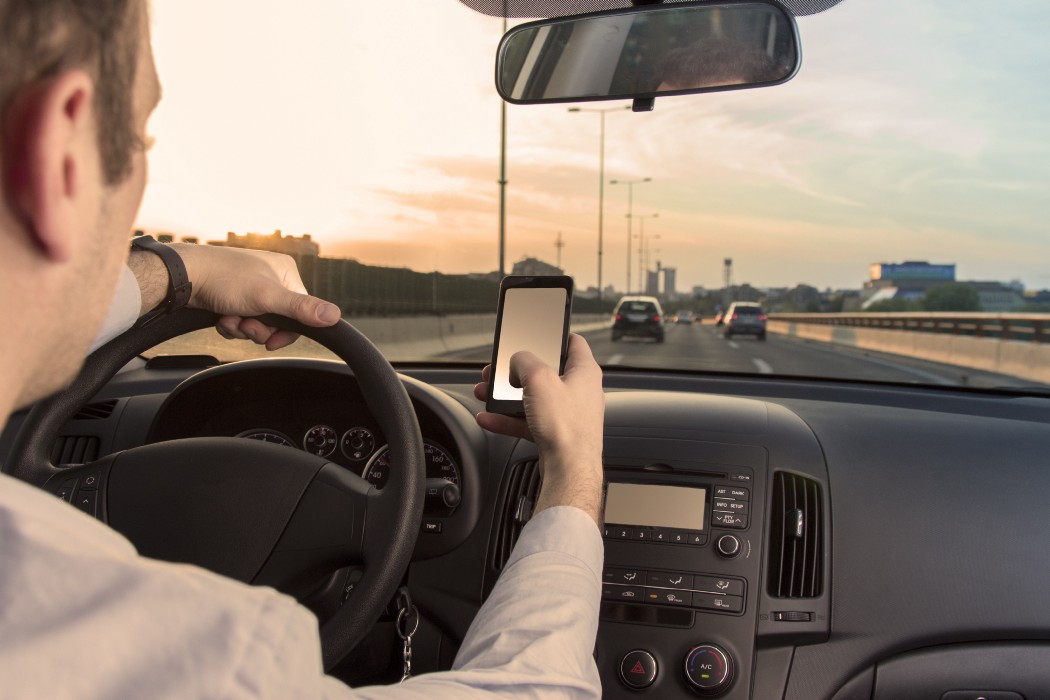
Imagine this common scenario: A car pulls up to a red light at a four-way intersection. When the light turns green, the vehicle subsequently accelerates through the intersection. However, there is an oncoming car being driven by a distracted person, preparing to make an illegal left through the red light. Due to the lack of awareness by the driver, by the time he or she saw the red light, a safe maneuver could not be made, and a collision occurs.
Distracted drivers are a severe burden on our society today. Every day, over 1000 people are injured in car accidents in such scenarios. In fact, cell phone use alone accounted for 27% of all crashes in 2015. Annually, over 3000 people are killed and almost 400,000 injuries occur. Given that the number of road occupants are increasing every year, these figures will subsequently keep rising unless a solution is discovered.
Delving into the mechanisms behind these drastic statistics – humans have a non-zero reaction time (1.5 seconds). That means that if they are not fully focused, they will often notice critical visual cues too late, leading to a dangerous series of events. Take a look at the diagrams below to see a depiction of this:
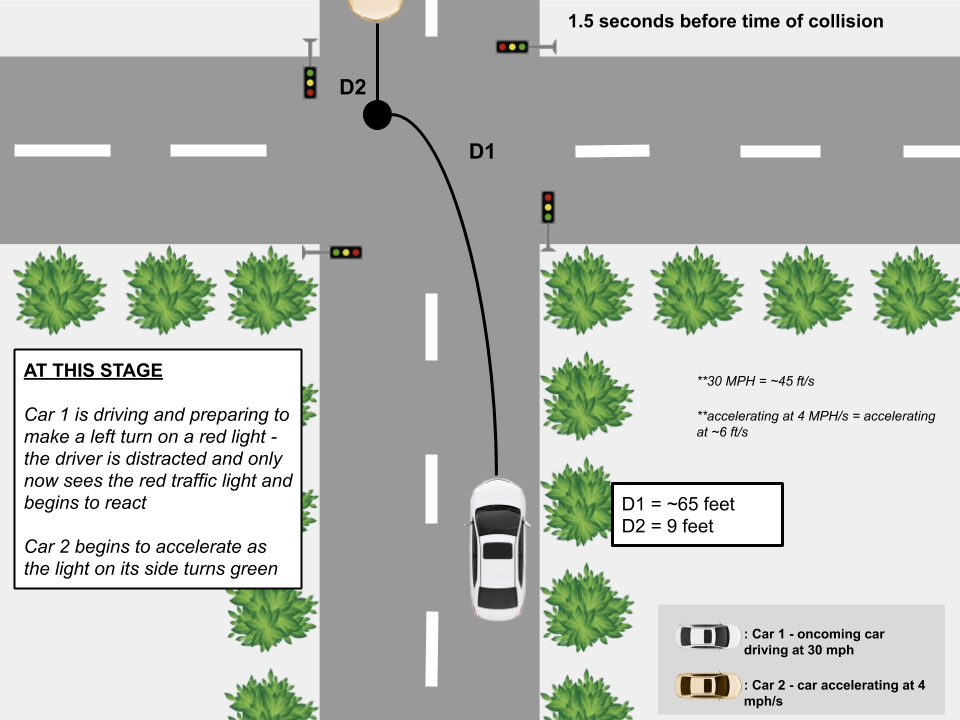
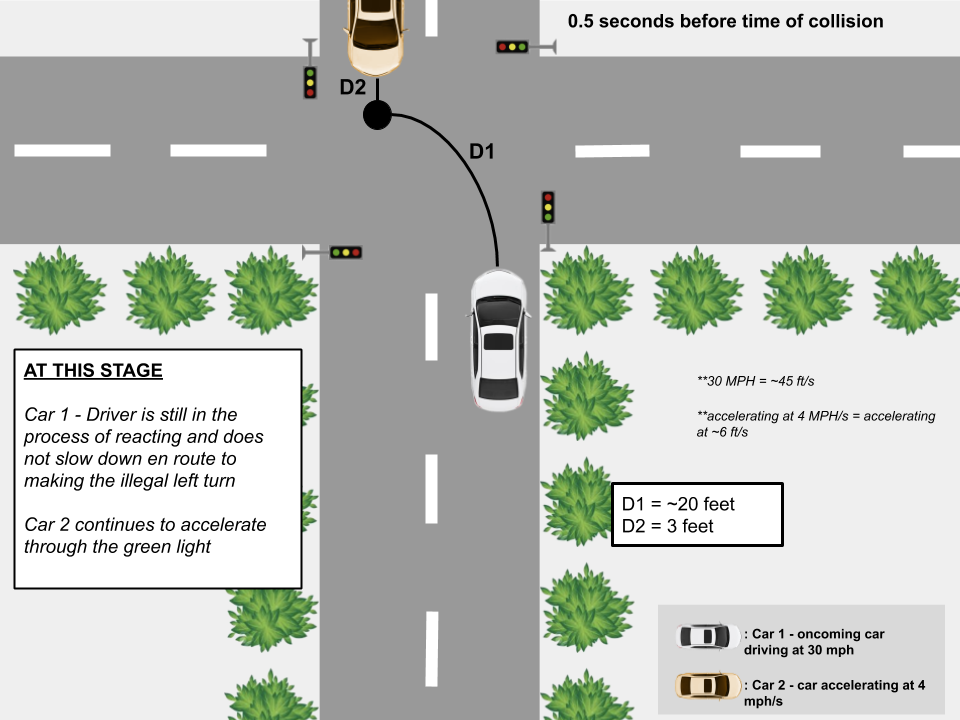
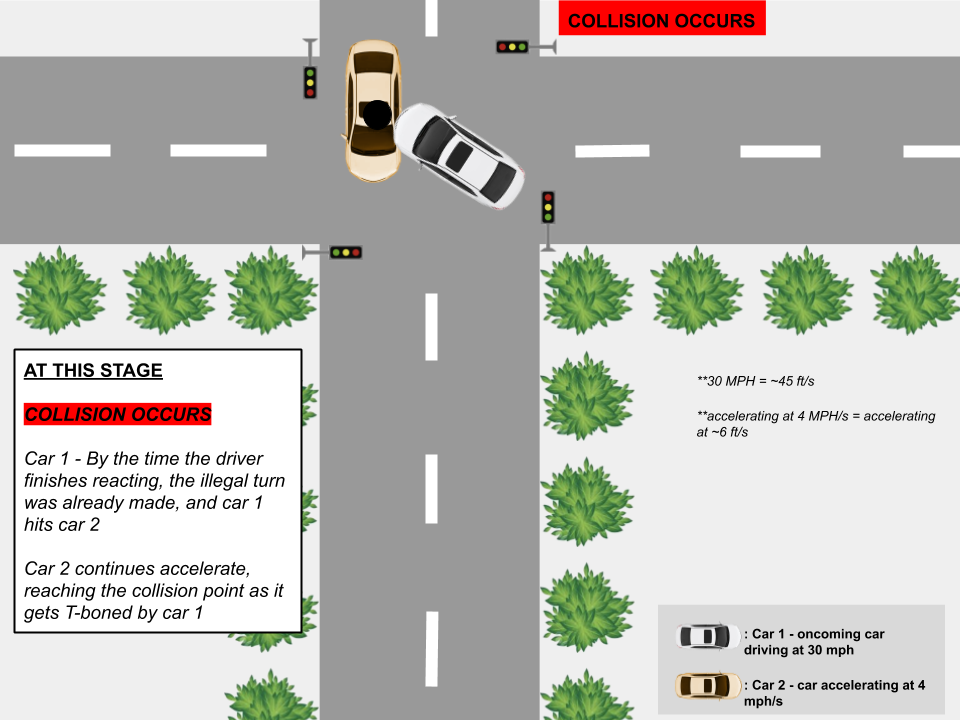
Because the driver was distracted, the red light was not noticed in a timely manner. By the time he or she finished reacting, the collision had already occurred. To avoid this consequence, there must be something that can prevent such scenarios from occurring.
Luckily, the industry is shifting to an autonomous vehicle (AV) model, presenting a solution to the dire situations presented by distracted drivers. Check out the figures below to see same scenario as above, only with an AV replacing the human driver in the oncoming car.
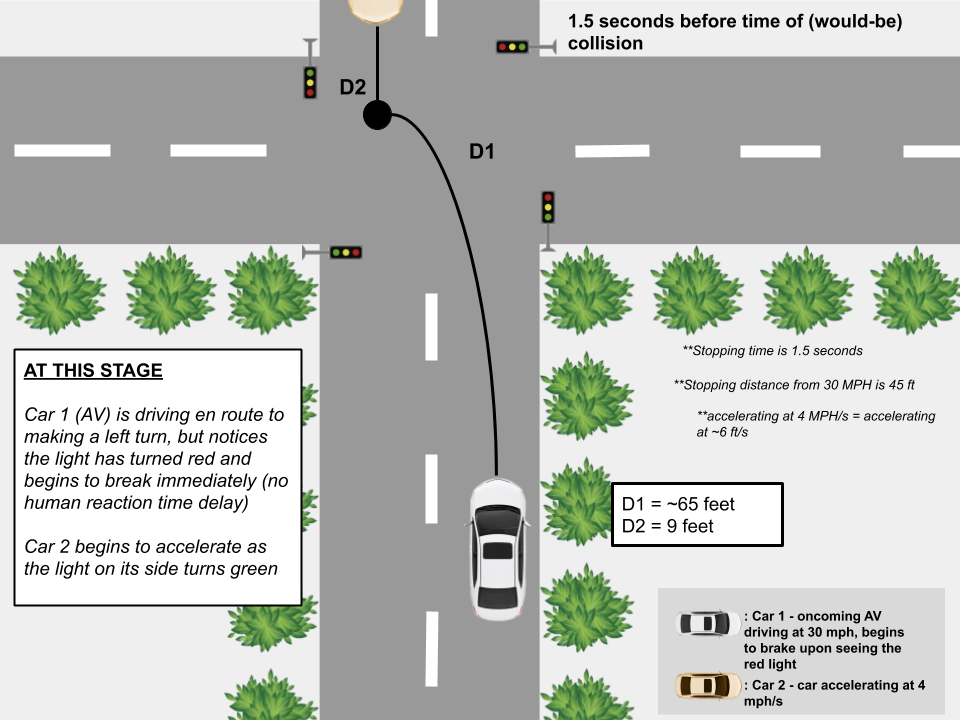
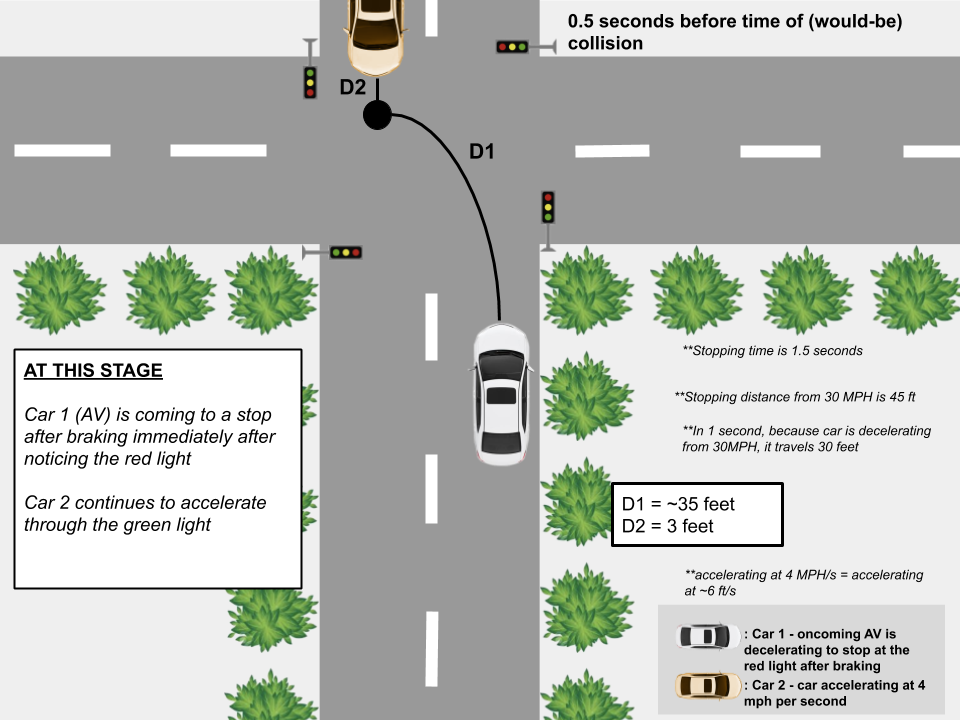
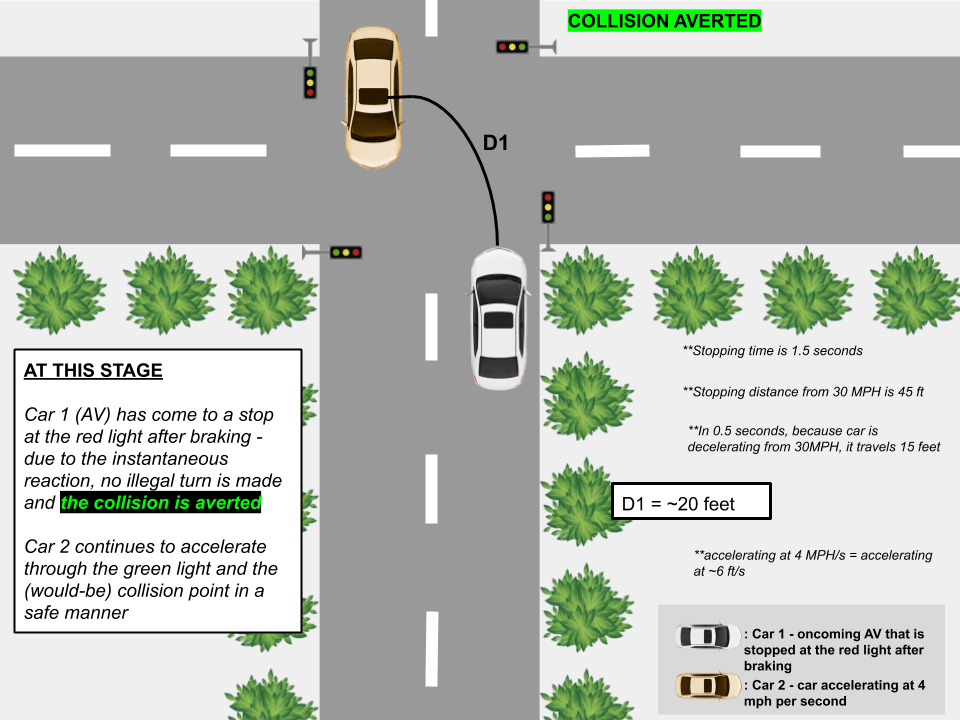
With the human acting solely as a passenger, the 1.5 second reaction time is eliminated, and the AV has ample time to safely brake at the stoplight to avert the collision. With a self-driving car operating, it does not matter if the human is distracted – this accident will be prevented.
When we drive, to process our surroundings in real-time, our brains use a data center level of compute while consuming minimal power. However, even with this enormous ability, humans drive imperfectly. To fully mitigate human error, an autonomous vehicle must be equipped with a platform that generates a minimum of 75 Tera-Operations-Per-Second (TOPS) of compute for every watt of power consumption. This unsolved optimization barrier is known as the visual perception problem.
Unfortunately, current solutions on the market today can only enable partial autonomy. These platforms are based on repurposed legacy technology, such as the GPU. Because they are not purpose-built for the immense task of self-driving, they are constrained from a capability standpoint, and cannot solve the visual perception problem. To solve the issues with distracted driving, a novel, purpose-built, solution must be brought to the market to enable fully autonomous vehicles and allow humans to act solely as passengers, eliminating any risk of human error.
By Sidhart Krishnamurthi, Product Management @ Recogni
To learn more about Recogni, check out www.recogni.com