
Imagine this common scenario — you’re driving in your neighborhood, approaching a four-way stop sign. You stop and check your surroundings, and just as you begin to accelerate, you see another car coming toward you, fast, making an illegal left turn! By the time you’re able to brake, you’re in a T-bone collision.
T-bone collisions have dire consequences. Annually, they kill an estimated 8,000 to 10,000 people — more than both head-on crashes and incidents with vulnerable road users (VRUs) combined. T-bone collisions account for over 50% of all car accidents. Because of the nature of this crash type, survivors face debilitating neck, back, and spinal injuries. Clearly, there needs to be a change.
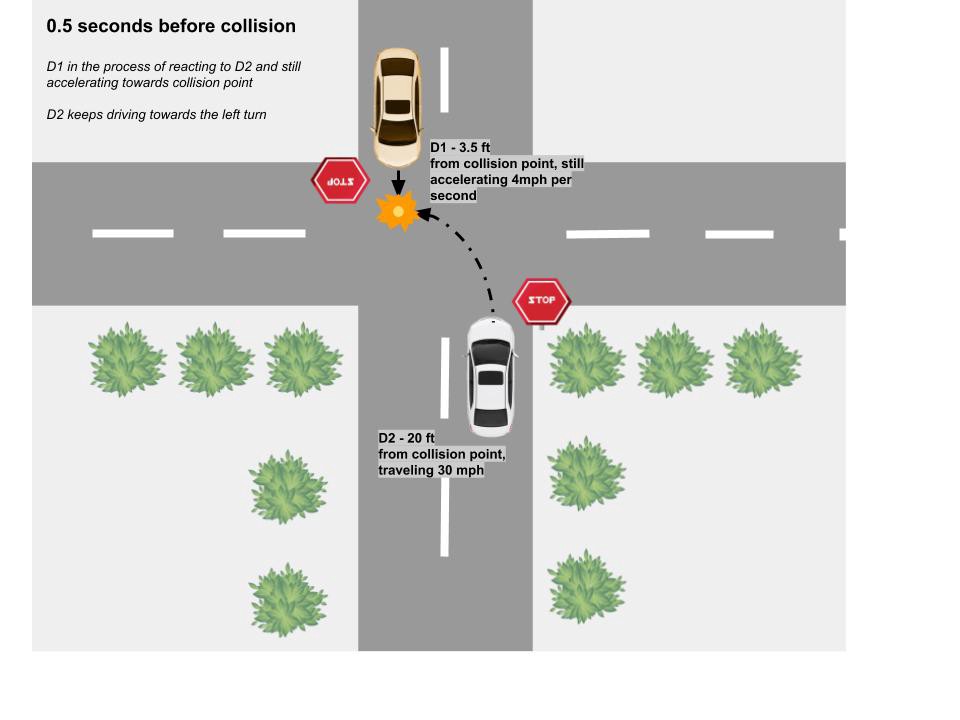
T-bone collisions stem from the non-zero human reaction time (1.5 seconds) which prevents drivers from making a safe maneuver. Take a look at the three diagrams below, representing a common four-way stop in broad daylight:
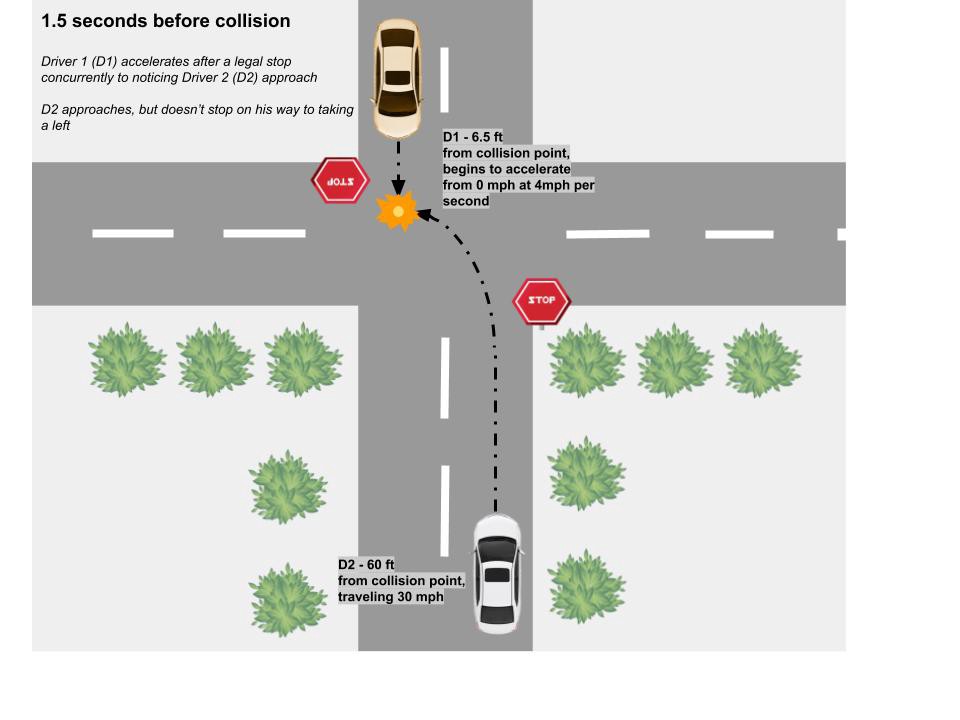
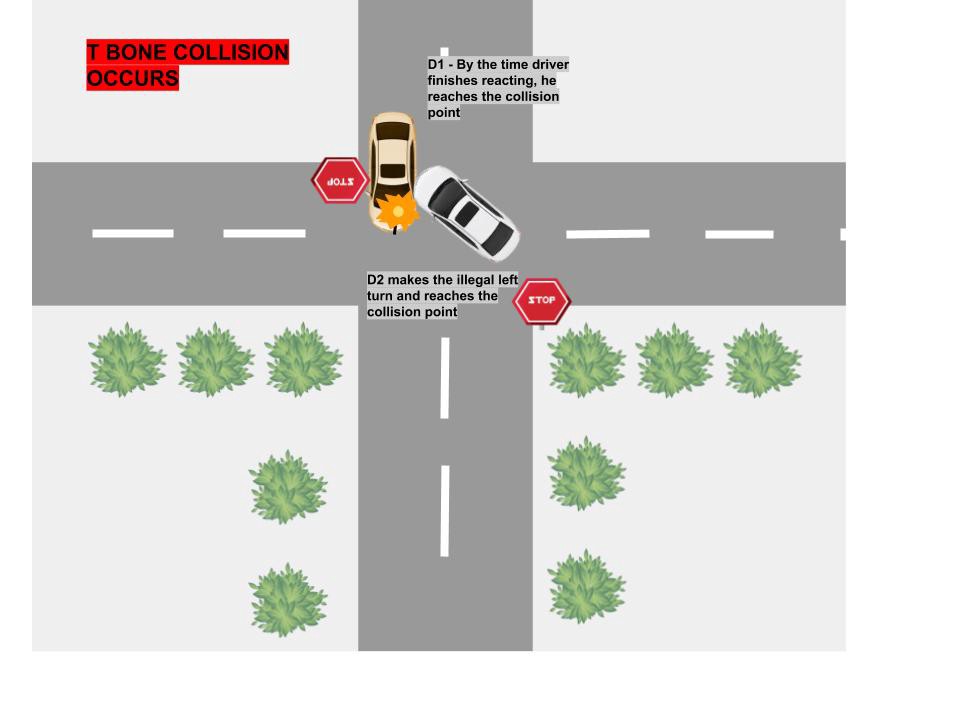
Because the driver of the car can’t react in time, they are caught in a T-bone accident. This everyday scenario does not take into account other exacerbating factors, such as bad weather, night driving, or distracted driving. All of this necessitates an even quicker reaction time, contributing to the dire statistics outlined above.
Fortunately, autonomous vehicles (AV) provide a solution for these concerns. What if you were in an AV when the other car took a dangerous turn into your lane?
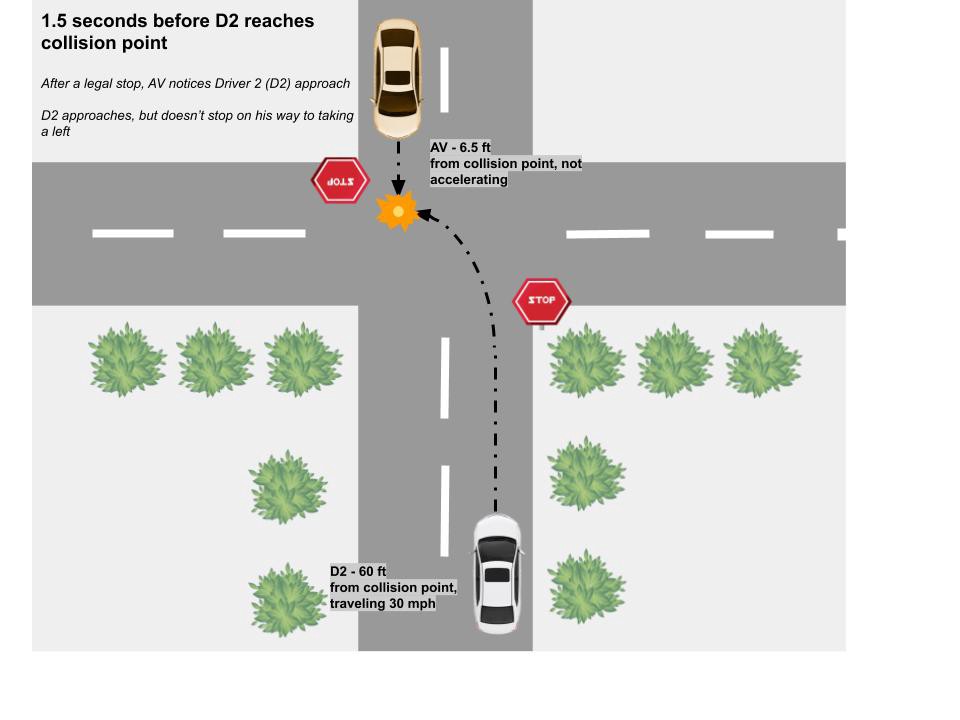
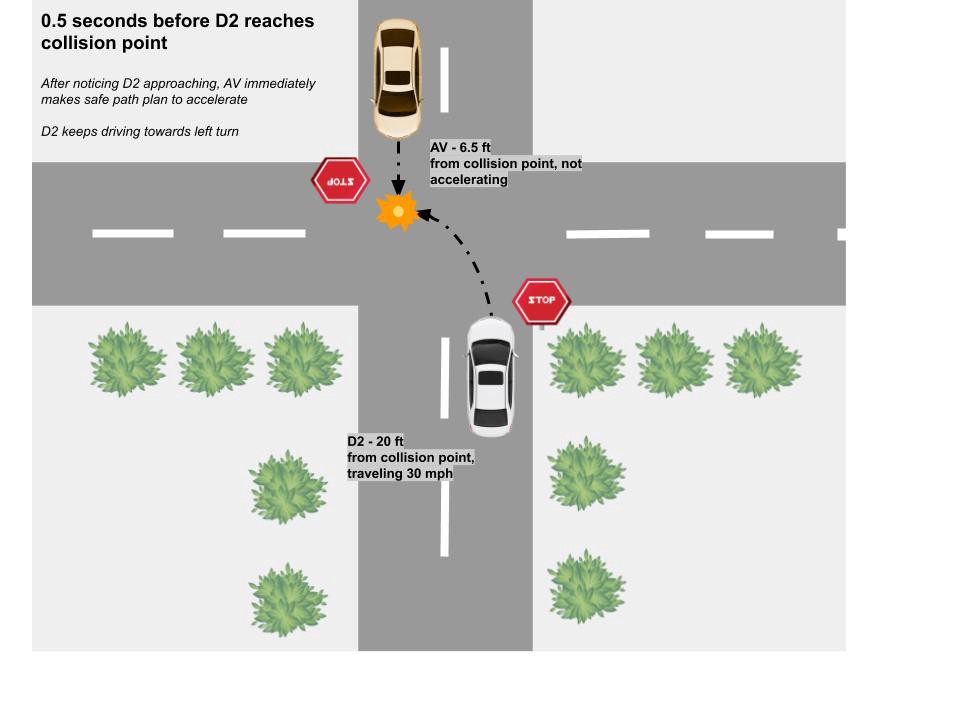
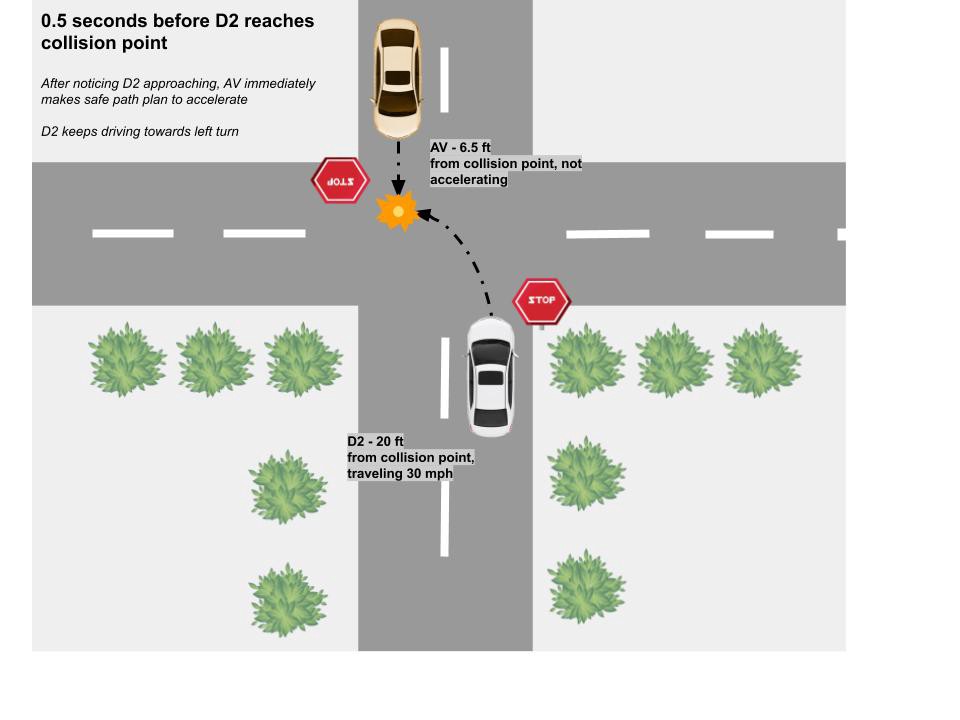
In the scenario above, when the AV notices the oncoming vehicle, it immediately makes the safe maneuver to not accelerate through the intersection — due to the elimination of reaction time, the T-bone collision is averted.
When humans drive, to subconsciously process the plethora of visual data surrounding them, they use billions of neurons to produce a data-center level of compute while consuming minimal power. To mitigate T-bone collisions, AVs must do even better, highlighting the biggest barrier to vehicle autonomy — the visual perception problem.
To solve this, an AV needs a platform with 75 tera-operations-per-second (TOPS) of compute for every Watt of power consumption. This solution must be robust against all exacerbating factors to flawlessly drive under any circumstance. Unfortunately, there is nothing on the market today that can enable this — current partial autonomy solutions require a human driver, allowing the reaction time to play a devastating role in T-bone collisions.
Luckily, we @ Recogni are developing a solution that will enable AVs to perfectly perceive their surroundings in real time. Our ultra-efficient chip will have 1000 TOPS of processing power, while consuming only 10 Watts. Cars with our technology can see a traffic light over 160 meters away and can drive under any condition. Thus, our product will be the premier solution for car OEMs to integrate into their vehicles and eradicate T-bone collisions for good.
To learn more about Recogni Inc., check out www.recogni.com
By Sidhart Krishnamurthi, Product Management @ Recogni