How Advanced Technology Is Transforming Power Forecasting and Reducing Operational Costs
The transformation of energy markets isn't just happening – it's accelerating at breakneck speed as smart algorithms rewrite the rulebook on how utilities operate. According to a study conducted by researchers from Cornell University, the use of AI for electricity price forecasting with deep convolutional neural networks has achieved an average absolute percentage error of about 5.5%, demonstrating the high accuracy of these models.
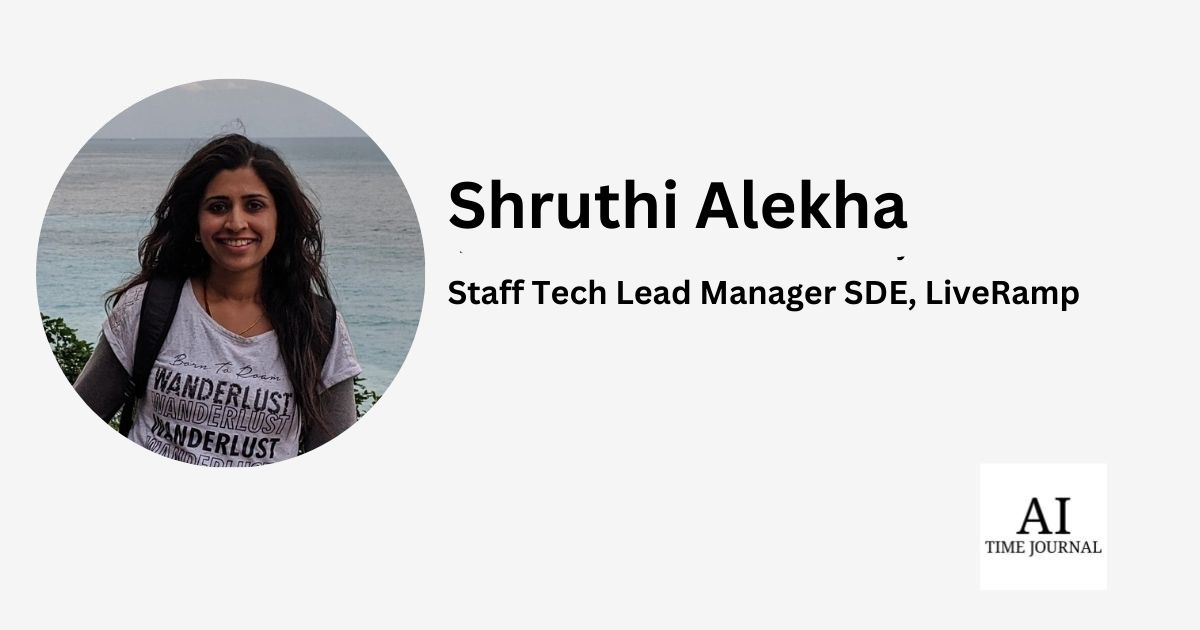
As a Senior Software Architect with over 16 years of experience designing cloud-native applications, Shruthi Alekha has dedicated significant portions of her career to creating scalable data infrastructures and algorithms that form the foundation of AI-driven decision tools used today. Her innovative approach to predictive analytics has enhanced market efficiency and positioned her as a leading voice in integrating AI within critical infrastructure systems.
From Oncology Algorithms to Energy Market Innovation
Shruthi's professional evolution into the realm of predictive analytics took an unexpected path through medical technology. After earning her Bachelor's degree in Computer Science with distinction in India, she cut her teeth at Siemens Healthcare in 2007, developing specialized software for tumor treatment in oncology departments.
"My first role at Siemens gave me invaluable experience creating mission-critical applications," Shruthi explains. "Working on software that would be used in Heidelberg University Hospital taught me the importance of precision and reliability in everything I build."
This foundation in healthcare software development, combined with a Master's degree in Computer Science from Boston University, laid the groundwork for her later innovations. At Boston University, Shruthi created a Java-based interactive visualization tool for virus protein sequences, earning her the Applied Science Award in 2012.
"The peptide visualization project was incredibly technical," Shruthi explains, leaning forward. "We were taking protein sequences from viruses – long strings of amino acids—and creating a visual interface that allowed immunologists to identify patterns. The real challenge was the sheer volume of data. Each virus has thousands of proteins, which can have hundreds of amino acids."
Her solution employed Hadoop – a framework that splits heavy computational tasks across multiple computers. This approach cut analysis time from weeks to minutes, significantly accelerating vaccine research timelines. This practical experience with distributed computing later proved invaluable when tackling energy market predictions, where processing speed directly impacts trading decisions and revenue.
Revolutionizing Power Markets with Advanced Data Analytics and Real-Time Data Infrastructure
The actual breakthrough in Shruthi's career happened during her seven-year stint at Genscape (now part of Wood Mackenzie) from 2013 to 2020, a leading global provider of real-time data and analytics for commodity and energy markets. This period predated widespread AI adoption in the energy sector, but her pioneering work with big data analytics and advanced statistical modeling laid crucial groundwork for what would later evolve into AI-powered applications in the industry. As an Architect there, she spearheaded the creation of a revenue-generating predictive analytics engine that fundamentally changed power market pricing through advanced machine learning techniques and live data inputs.
Working directly with the Director and leading a diverse team that spans development, quality assurance, and DevOps, Shruthi designed a system that significantly improved energy traders' decision-making. Her architecture utilized Azure Kubernetes and SignalR for real-time data streaming, combined with sophisticated interpolation algorithms for processing large datasets.
"The predictive analytics engine we developed at Genscape was the highest revenue generator at that time" Shruthi notes with pride. "This wasn't just a technical achievement—it directly contributed to revenue growth by establishing Genscape as a trusted market analytics provider."
The impact of this work extended far beyond the company itself. State power authorities, including California's Energy Commission, relied on these tools to analyze and predict power prices, enabling more efficient grid management and resource allocation during peak demand periods.
Alongside the predictive analytics engine, Shruthi designed ML-powered image processing tools for a completely different challenge: monitoring oil, gas, and power pipelines. This project harnessed computer vision to analyze thousands of satellite and drone images of infrastructure, automatically detecting potential leaks, structural issues, or unauthorized access.
"Our image recognition system could identify subtle changes in vegetation patterns around pipelines that often indicate underground leaks," she explains. "It could also detect structural anomalies in power transmission systems by comparing current images against historical baselines."
Cloud Transformation and Operational Excellence
First, she led the API Modernization project, transitioning legacy SOAP services to RESTful APIs. This architectural shift reduced response times by 50% and enabled more efficient data processing, freeing the company from cumbersome legacy protocols.
Second, Shruthi championed the Cloud Migration to Azure initiative. This strategic move eliminated the challenges of managing manual deployments and disaster recovery through on-premises systems by implementing CI/CD pipelines.
The migration leveraged Azure's native services, including Redis, Azure SQL, and Azure Functions. She also integrated Auth0 to enable company-wide single sign-on across multiple applications.
Her method for managing these transitions went beyond technical specs and diagrams. "Moving to the cloud wasn't just about switching servers," Shruthi recalls between sips of coffee. "We had to convince people who'd been doing things one way for years that short-term headaches would pay off down the road. Some days felt like being both an engineer and a therapist."
Her leadership qualities during this period earned her the Diligence Award at Genscape in 2018, recognizing her exceptional commitment to excellence and innovation. More recently, Shruthi beat out dozens of senior tech executives to win the BrainTech Award’s "Tech Leader of the Year 2024" – a testament to her growing influence in the industry's AI implementation arena.
Building Teams Across Borders
One of Shruthi's most significant achievements at Genscape was developing structured mentorship programs and career development frameworks, contributing to an impressive 90% team retention rate. Managing distributed teams across multiple time zones, she ensured smooth communication and effective collaboration.
"Technical problems can be fixed with the right code, but getting people from different continents to work as one unit? That's a whole other ball game," Shruthi explains. "I focused on ensuring engineers understood their value and saw how their individual contributions fit into our bigger goals."
Her approach to leadership fostered a culture of innovation and quality, guiding teams to meet ambitious targets while maintaining high morale consistently. Colleagues frequently praised her ability to bridge technical complexity with clear business objectives, making her a valued partner to engineering teams and senior management.
Redefining Secure Data Collaboration
Shruthi's current technical focus at LiveRamp centers on developing scalable data clean rooms – secure environments where organizations can analyze combined datasets without exposing underlying raw data. Her most significant innovation has been transforming these environments from interface-dependent systems to fully programmable platforms.
The API Framework she engineered solved a fundamental limitation in data collaboration technology. "While User Interfaces are useful, they can be restrictive when dealing with complex or large-scale workflows, especially for businesses that need to automate tasks or integrate the Clean Room functionality into their existing systems," Shruthi explains. "By building a comprehensive API layer with proper security controls, we enabled organizations to build automated workflows that align with their specific privacy requirements."
Her expertise was also instrumental in developing cross-cloud export capabilities that transformed how organizations utilize clean room insights. Engineering secure data pathways across different cloud providers enabled seamless integration between protected data environments and external systems. This innovation allowed organizations to incorporate secure analytics directly into their existing data ecosystems, including business intelligence dashboards, data warehouses, and decision-making frameworks.
Looking to the Future
Currently, Shruthi holds Senior Member status with the IEEE, a recognition that reflects her years of technical experience and contributions across multiple areas of applied engineering. This designation is typically given to professionals with established records of impact in their field and active involvement in advancing technology.
She has also been invited to serve as a jury member for the Globee Awards in Technology—an international program that recognizes innovation and achievement across the tech industry. This role, alongside her peer-review work for the EIS 3.0 International Conference on AI & Sustainable Solutions at BML Munjal University, reflects how her professional judgment is valued by global institutions.
Her long-term career objective is to expand her influence on strategic architectural decisions in the fields of data analytics and AI integration within large-scale enterprise platforms, seeking to improve data-driven insights within strict privacy protocols. "I want to keep pushing the boundaries of what's possible with AI integration in enterprise systems," she says. "There's still so much untapped potential, particularly in predictive analytics and secure data collaboration."