
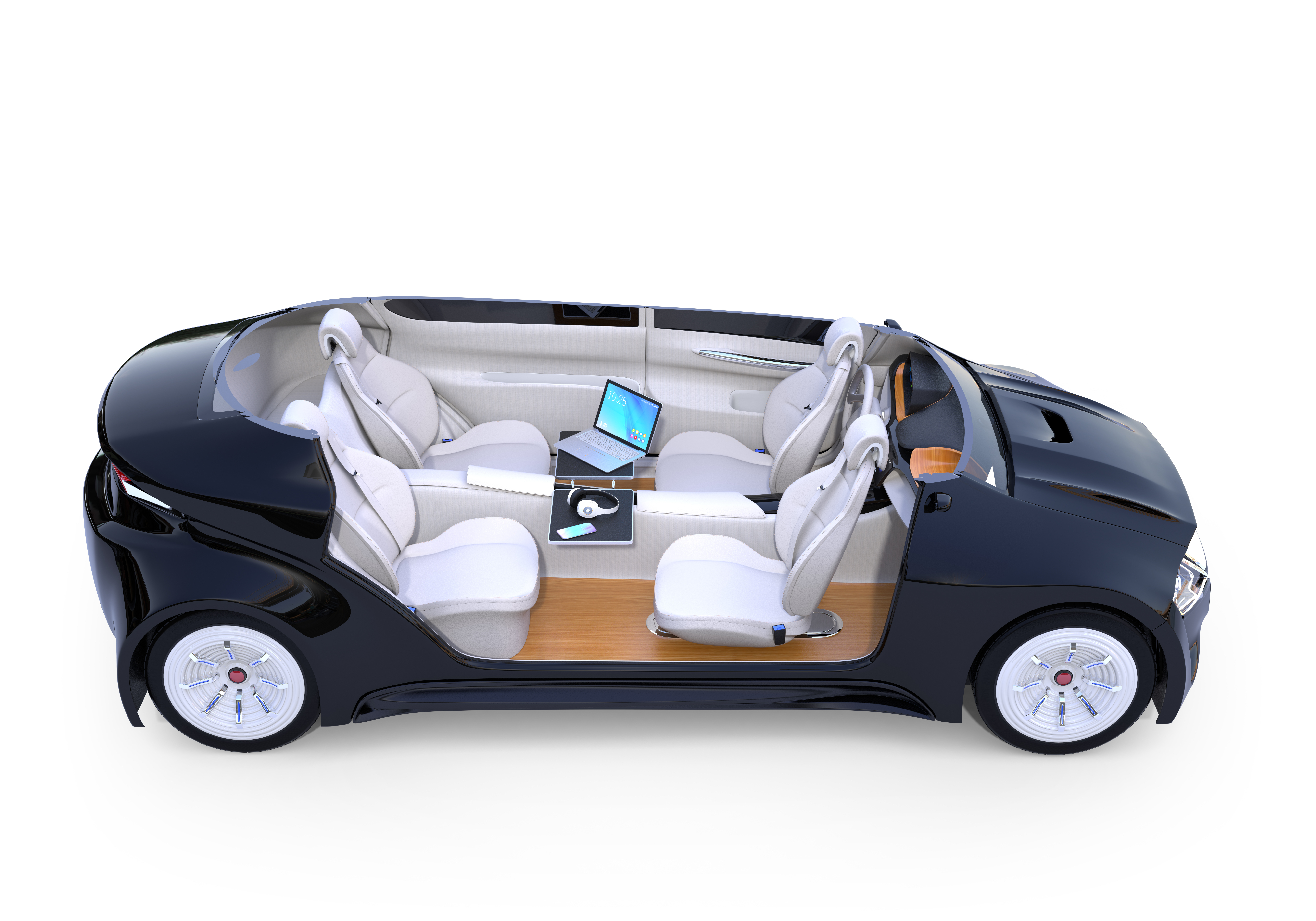
Currently, the auto industry is producing vehicles that have novel technological features. No longer solely products of conventional manufacturing, these cars now have advanced autonomous and electric capabilities – majorly due to the emergence of tech companies, who are developing “technology-first” automobiles. To compete in the long run, traditional car OEMs in this sector must take this shift into account and adapt with the market.
Traditionally, the auto industry has been dominated by manufacturing. Companies are horizontally integrated, and they source various mechanical components of cars from third parties (known as Tier-1 parts suppliers). After procurement, they integrate each part together, as planned in ideation, into a finalized vehicle.
However, there are new entrants, in the form of technology companies. Unlike traditional OEMs, these firms are vertically integrated. All of their development, particularly within the realm of tech innovation, occurs internally. Their cars are “technology-first” rather than just being based solely on the assembly of various mechanical components.
As a result, the rate of innovation has rapidly increased. Because OEMs normally outsource all AV technology development to third parties, there exists a lack of innovation within the companies themselves. On the flip side, technology companies are vertically integrated – they develop their own AV technology and deploy it onto their own vehicles. As a result, tech firms are bringing cars with advanced autonomous capabilities to the hands of consumers exponentially faster than traditional OEMs.
Given this, traditional OEMs must discover how to quickly enable self-driving capabilities in their cars. With the constraints that come with horizontal integration, these firms must source a third party that is developing a state-of-the-art platform to allow their vehicles to be autonomous. Through this, they can develop “technology-first” automobiles, allowing them to adapt with the industry as the rate of innovation speeds up in the realm of vehicle autonomy.
As we drive, our brains use a data center level of compute while consuming less power than a lightbulb. To mimic this and facilitate the production of “technology-first” automobiles, cars must be equipped with a platform that generates a minimum of 75 Tera-Operations-Per-Second (TOPS) of compute for every watt of power consumption. This unsolved optimization barrier is known as the visual perception problem.
Unlike incumbent solutions, which are based on legacy technologies such as the GPU, a new one must be created, purpose-built for autonomous vehicles. Because it will not be constrained from a technological standpoint, it will allow AVs to flawlessly perceive their surroundings in real time. Through leveraging key innovations in math, ASIC architecture, and AI, this solution should solve the visual perception problem outlined above. With these unique capabilities, traditional OEMs should procure this in order to develop “technology-first” automobiles.
To learn more about Recogni, check out www.recogni.com
By Sidhart Krishnamurthi, Product Management @ Recogni