
As the generative AI boom moves into its third year, the pace of innovation remains relentless, but the center of gravity is shifting. Once dominated by model size, training budgets, and benchmark scores, the conversation is increasingly focused on something far more practical: can these models do something useful for real people, right now?
A growing number of companies, especially those outside the initial Silicon Valley AI race, are betting that the next major wave in AI won't be about building the biggest model, but about building the most useful one.
From Parameters to Product-Market Fit
In 2023 and 2024, AI labs and startups competed to train ever-larger models, from GPT-4 to Gemini 1.5 to Claude Opus. But many of those gains, while impressive, were often imperceptible to end users. Today, product teams across the industry are increasingly asking: How fast does it respond? Does it understand my workflow? Can it run on cheaper hardware? Can my parents or my factory colleagues use it?
This shift isn’t theoretical. In 2025, the top 10 models on Chatbot Arena, a crowdsourced performance leaderboard hosted on Hugging Face, now include several LLMs optimized for responsiveness, multimodality, and open deployment. One notable example: Tencent’s Hunyuan Turbo S, which rose quietly through the rankings on the strength of its reasoning and real-world efficiency. Built using a hybrid Mamba-MoE architecture, Turbo S prioritizes low latency and structured thinking over pure parameter count.
But more important than how Tencent built the model is how it's being used.
AI That Doesn’t Just Demo — It Delivers
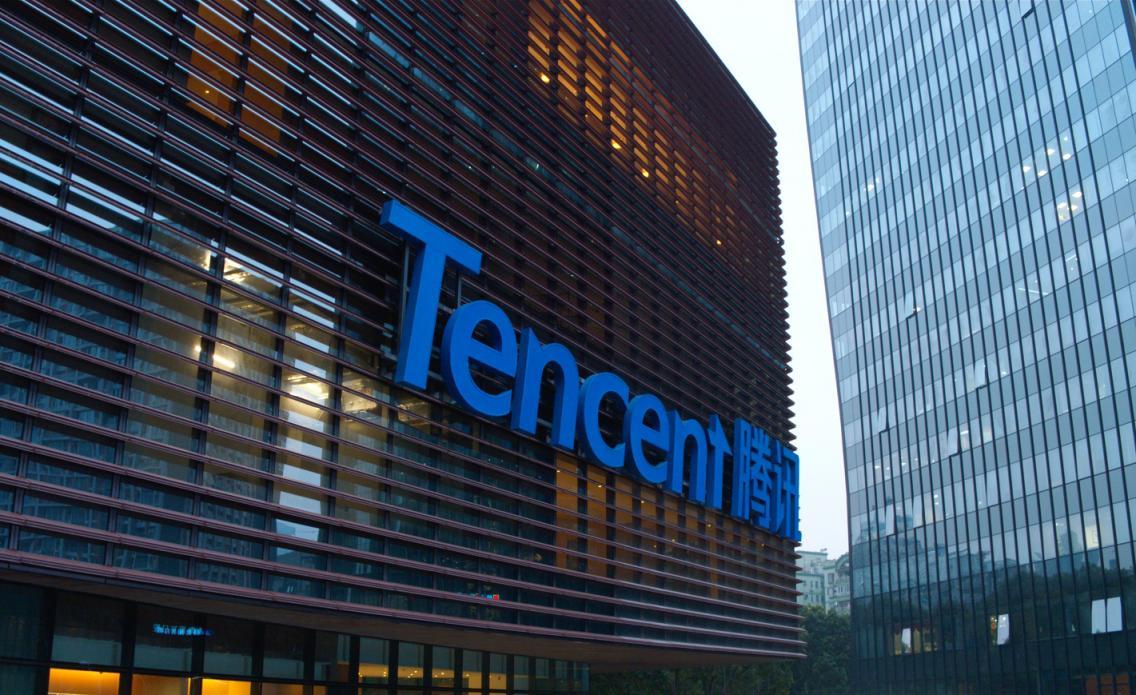
In a move that surprised some industry observers, Tencent has integrated its Hunyuan family of models across a sprawling suite of consumer and enterprise products: messaging apps (WeChat, QQ), document tools, browsers, and even voice assistants. In rural towns, an AI assistant called Yuanbao is helping farmers and small retailers draft contracts, generate marketing copy, and prep for licensing exams, all via mobile.
The goal isn't just to ship an AI, but to make AI feel invisible, embedded, and helpful, what one product lead described as “like a really sharp co-worker who never gets tired.”
Tencent isn’t alone. Across the industry, companies are learning that LLMs succeed not because users want AI, but because they want results. Whether it’s writing code, debugging contracts, or producing 3D game assets, models are increasingly evaluated not in isolation, but as infrastructure powering tools people already trust.
Embracing the Long Game: Iteration over Hype
Critics once accused some companies — Tencent included — of “missing the moment” in AI. But if 2023 was about launching, 2025 seems to be about landing. Tencent has ramped up its AI investment, allocating more than ¥76.8 billion (≈$10.6 billion) in capital expenditure for AI infrastructure in 2024 alone. Internally, its AI division was reorganized into language model, multimodal, data, and platform groups, enabling more agile coordination between model research and product deployment.
In parallel, the company doubled down on open source. Hunyuan 3D, a model for turning images and text into 3D assets, was released openly and has already passed 1.6 million downloads, now used by developers in game design, robotics, and AR. Tencent engineers have also contributed performance enhancements to open frameworks like DeepSeek’s DeepEP, even improving its networking performance on non-specialized hardware.
“We’re less focused on showing off benchmarks and more focused on finding where AI makes a difference — and then improving that piece,” one engineer familiar with Tencent’s AI efforts noted.
The Power of Infrastructure and Distribution
One under-discussed competitive advantage? Distribution. Companies with large existing user bases — and the infrastructure to ship frequent updates — can move faster once their models are ready.
Tencent’s AI assistant Yuanbao, for example, pushed 16 updates in 30 days after integrating DeepSeek R1 and Turbo S models. The daily active users jumped over 20x during a single two-month window. Such feedback loops allow teams to iterate and fine-tune rapidly, applying models in contexts as diverse as college entrance exam prep, urban navigation, or browser search enhancements.
This model of “distribution-first AI” is becoming a blueprint for other firms aiming to drive adoption beyond tech-savvy early adopters. The result is not a singular killer app, but an ecosystem of small, purposeful agents, each tuned to a specific need.
From Tech to Touchpoint
The next frontier for AI isn’t just solving bigger problems, it’s solving more human ones: how to serve factory workers, rural students, small business owners, or frontline hospital staff. And in that context, the most impactful models may not be the ones that make headlines, but the ones that quietly make life easier.
AI may be the biggest technology shift of this decade, but for users, it often boils down to one question: Is this useful to me right now?
A new class of LLMs, smaller, faster,and more grounded, is starting to answer yes.