What is your background and how did you get involved in Helpshift?
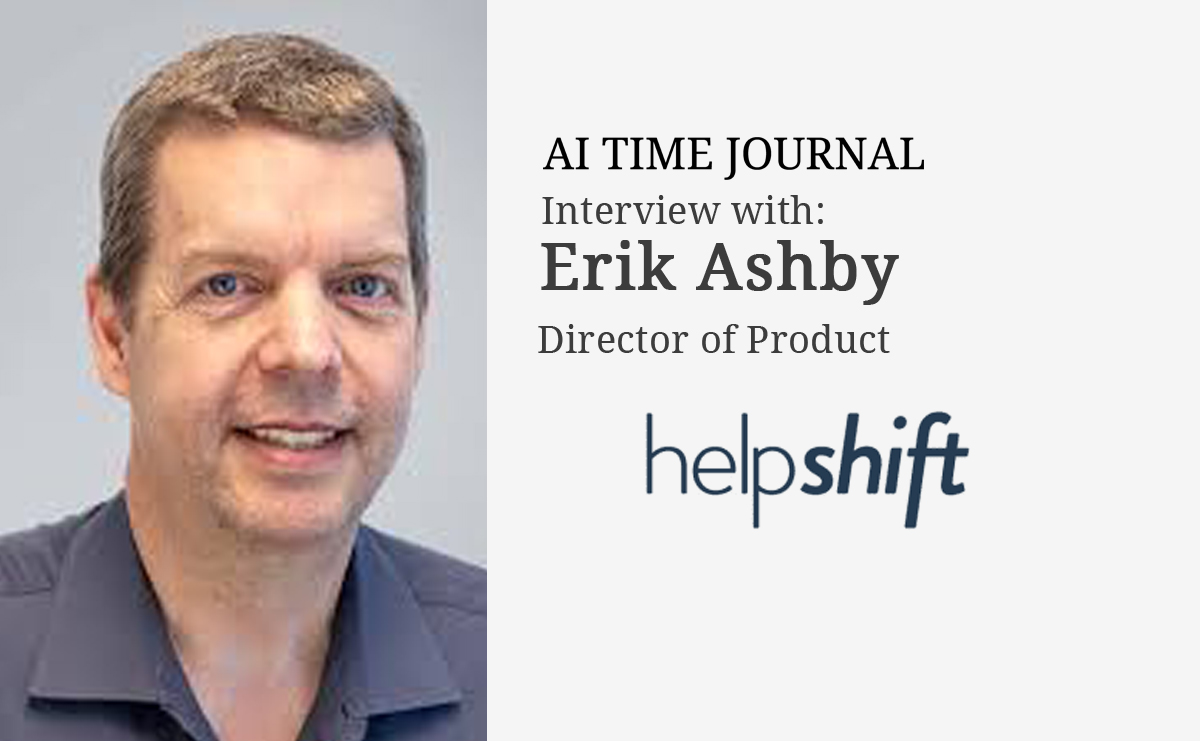
I am the Director of Product at Helpshift. I have been at
Helpshift for about three years and prior to that, I worked as a product
manager at Microsoft for twenty years. In that role, I worked on products like
Office 365 and Outlook. The last project I worked on at Microsoft was the
integration of Helpshift into Outlook and Helpshift really impressed me by what
it had to offer which lead me to working at Helpshift. Microsoft continues to
be an investor and customer of Helpshift and they use the platform in a number
of their brands, including all of the Outlook products.
You recently hosted a session titled “Debunking Common Misconceptions of AI & Automation” at CCW 2020. What were the main insights from the session?
The critical insight is that although we’re talking a
lot about automation as an industry, in reality, the industry as a whole is not
making the progress that it needs to be making in automation.
Only 6% of contact centers say they are actually
successful at automating, which is a huge difference from the message coming
from leaders who are really talking up automation. As an industry, we need to
be paying attention to the people actually implementing the tools and listening
to their drawbacks around automation.
As an industry, we are thinking about automation
backwards from the way we should be thinking about it. The general goal of the
industry is to make bots more human-like, but when we actually look at the
humans working in call centers, the humans are performing robotic tasks -- reading
through a script and following a workflow. Our goal is to make humans less
robotic by diverting the mundane, repeatable tasks to automations, which will
allow humans to do what they do best -- be more creative, show more feeling,
and make a real impact.
What is your take on automating Customer Experience?
We need to reframe how we think about the use of AI and
automation. We should focus the AI and automation on process-oriented customer
solutions instead of trying to create human-like dialogues. While human-like
robots have been showcased in popular culture, we find that this experience is
not proving successful at customer service. For example, when IBM’s Watson was
unveiled and won Jeopardy, the world was astounded that a machine could be so
“intelligent” and hypothesized all sorts of use-cases for the technology. But
when Watson was applied to customer support, it wasn’t focused, was far too
complicated and wasn’t proving useful to brands. The industry needs to apply
chatbots where they work best, which is process oriented tasks, like a robot.
We take this approach at Helpshift and even have brands that automate 60-70% of
their volume with focused chatbots that aim to solve a specific problem.
What are the biggest challenges that you are currently facing at Helpshift?
The biggest challenge we’re facing at Helpshift is
educating the industry to understand that there is a different way to think
about AI and automation. Many larger brands are focused on the more human-like
way of building bots instead of directing bots to work through their assigned
steps with a directed workflow. The industry is consistently basking in
technology advancements without considering how they’re going to be applied or
whether they’re actually adding value to the industry. Getting that word out
has been a challenge, but every day we succeed as more brands are realizing
this shift and as we continue to press forward.
Tell us about the upcoming Helpshift product launches.
AI based intent classification is the cornerstone of large
scale intelligent automation, and enables the precise orchestration of the
support journey based on customer intent. Based on our learnings from millions
of issue classifications, we will be releasing our latest development of
intelligent issue classification in the coming months that will open up
enterprises to new levels of automation. Enterprises will be able to leverage
our patent-pending AI technology to automatically have a deep and ongoing
understanding of their most important support segments, then use this
segmentation knowledge to drive extremely accurate and customer-friendly
experiences to solve customer requests.
Which internal processes are you helping enterprises automate with bots & conversational AI?
The first, and by far most common use case, is to enable
AI and a process oriented chatbot to have a deep understanding of the customers
problem & request. We see brands having a huge impact on both the customer
experience and the cost of support by using chatbots to handle the initial
triage dialog of a conversation. The AI will focus the conversation and the
process oriented chatbot will collect data through a series of menus and input
selections. Second, enterprises are using process oriented chatbots to handle
their most common customer issues. Most brands already have a suite of well
documented processes for their agents. Using an easy-to-build bot builder,
these processes can be converted to a chat bot, so that these common problems
can be solved by the chatbot directly. This frees the human agents to solve
customer issues where creativity and human ingenuity is needed.
Which conversational AI-related technology trend do you think will have the biggest impact in your industry in the coming years?
In the coming years, the concept of combining intent
classification with process oriented chatbots is eventually going to win out. I
already see the industry, including some of the big players, starting to come
out with similar ideas. The industry is coming around to realizing this and
will eventually agree on the importance of the combination of AI-powered
classification and process oriented chatbots.