Abstract
The article analyzes the transformational role of artificial intelligence (AI) in reshaping digital marketing strategies. The key areas of application are examined: customer behavior analytics, content personalization, advertising campaign optimization, and audience interaction automation. Particular attention is paid to predictive analytics and generative AI as tools for increasing engagement and improving return on investment (ROI). Based on industry data, it is concluded that AI is becoming not an auxiliary, but a system-forming element of competitiveness in the digital economy.
Keywords: artificial intelligence, digital marketing, personalization, predictive analytics, customer experience, generative AI, ROI, automation
1. The Growing Role of AI in Marketing
The development of digital platforms has led to an increase in the volume of customer data. Traditional marketing tools are no longer capable of processing this information in real time. AI has become the technological solution that enables the transformation of large data sets into actionable insights.
According to McKinsey (2023), companies actively implementing AI in marketing increase their revenues 15–20% faster than competitors. The adoption of these technologies has changed strategy: decisions are now made not on intuition, but based on precise forecasts.
2. Personalization and Customer Experience
One of the most noticeable effects of AI implementation has been personalization. Algorithms analyze user behavior, transaction history, and preferences to create unique offers. Mass campaigns have been replaced by individualized interaction scenarios.
Examples such as Amazon and Netflix have become benchmarks: their recommendation systems increase engagement and drive sales growth. According to Deloitte (2024), personalized campaigns retain customers 40% more effectively than standard methods.
3. Predictive Analytics and Market Forecasting
AI is used for predictive analytics — forecasting demand, preventing customer churn, and identifying trends. This enables companies to allocate budgets more efficiently and manage their product portfolios.
In retail, AI models reduce storage costs by 30% and improve the resilience of supply chains. For marketing, this means the ability to avoid costly errors in advertising campaign planning.
4. Generative AI and Content Production
The emergence of generative AI has transformed the process of creating marketing content. These technologies allow for the automatic generation of texts, images, and advertising materials, accelerating strategy testing and reducing operational costs.
According to PwC (2023), more than 60% of marketing departments worldwide are already experimenting with generative AI, and 25% have integrated it into regular processes. This increases the speed of campaign adaptation and reduces content production expenses.
5. AI in Advertising and ROI Optimization
AI has become the core of programmatic advertising, where algorithms automatically purchase ad placements and manage bidding. This approach reduces inefficient spending and focuses budgets on audiences with a high probability of conversion.
Studies show that ROI in campaigns using AI is 20–30% higher than in traditional advertising. However, challenges remain related to algorithm transparency and the ethics of data processing.
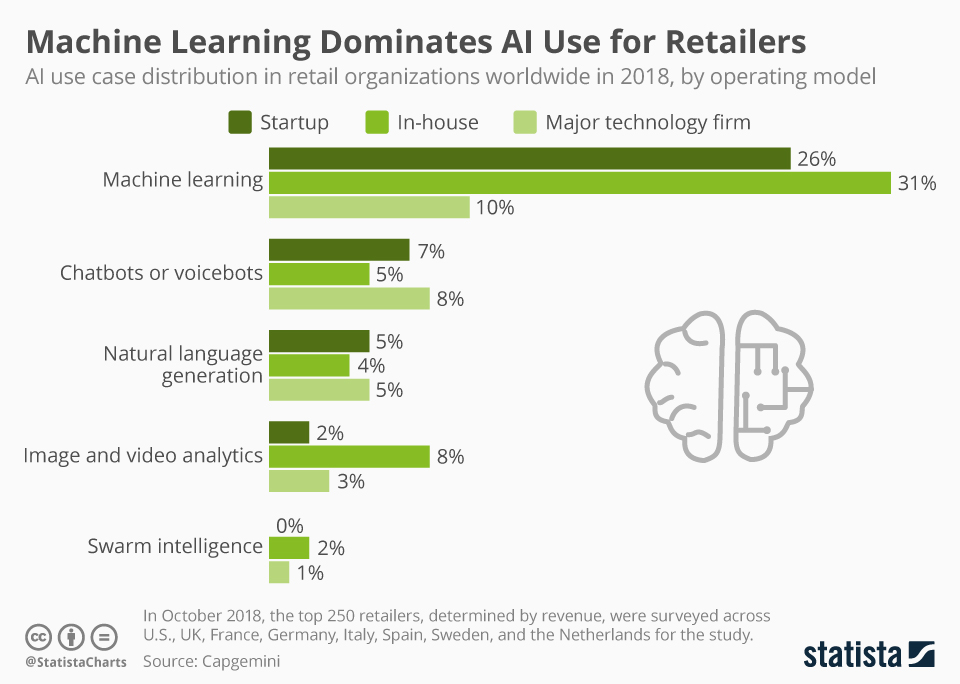
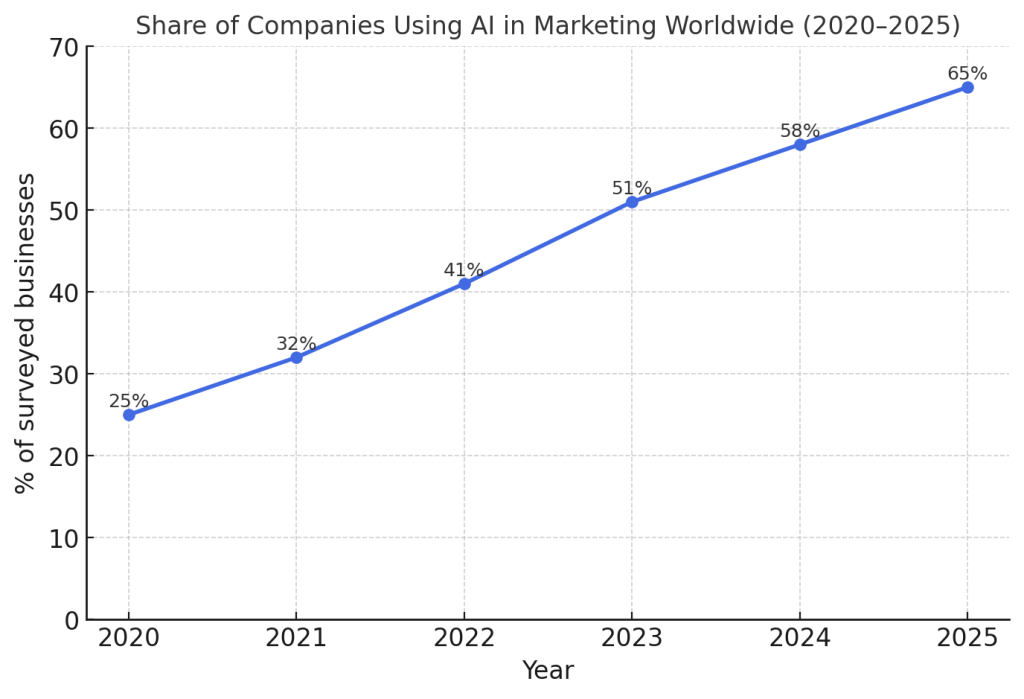
Figure 1 — Share of Companies Using AI in Marketing Worldwide (2020–2025, % of Surveyed Businesses)
2020 – 25%
2021 – 32%
2022 – 41%
2023 – 51%
2024 – 58%
2025 (forecast) – 65%
Conclusion
AI is becoming an integral element of digital marketing. Personalization, predictive analytics, generative content, and programmatic advertising are shaping new standards of efficiency. Companies that implement AI gain a competitive advantage, expressed in higher profitability and long-term customer loyalty.
By 2030, it can be expected that AI will become the central tool for managing customer interactions across all industries. This will enable marketing to fully transition from a supporting function to a strategic discipline of the digital economy.
Sources
- McKinsey & Company. The State of AI in Marketing. 2023.
- Deloitte. Digital Marketing in the Age of AI. 2024.
- PwC. Generative AI and the Future of Business. 2023.
- Statista. Artificial Intelligence Adoption in Marketing Worldwide 2020–2025. 2024.