It’s hard to find anyone involved with the chatbot and virtual agent industry who hasn’t heard the cautionary tale of Microsoft’s AI chatbot Tay. In less than 24 hours, Twitter users trained Tay to give offensive, racist and inappropriate responses which resulted in Microsoft taking Tay offline. Described as a ‘machine learning project designed for human engagement,’ Tay ended up becoming an often-cited example of an AI chatbot gone wrong.
As someone who has been working with virtual agent technology for nearly 20 years, Tay reinforced for me that pure AI is not the right answer for customer service and employee support virtual agents and chatbots. Yet, when Facebook announced the launch of chatbots on their Messenger platform and the media frenzy around AI and chatbots took hold, some conversational AI vendors jumped on the AI bandwagon. The industry suddenly became saturated with both false promises about the capabilities of the technology and a plethora of new start-ups claiming to have AI-powered customer service bots.
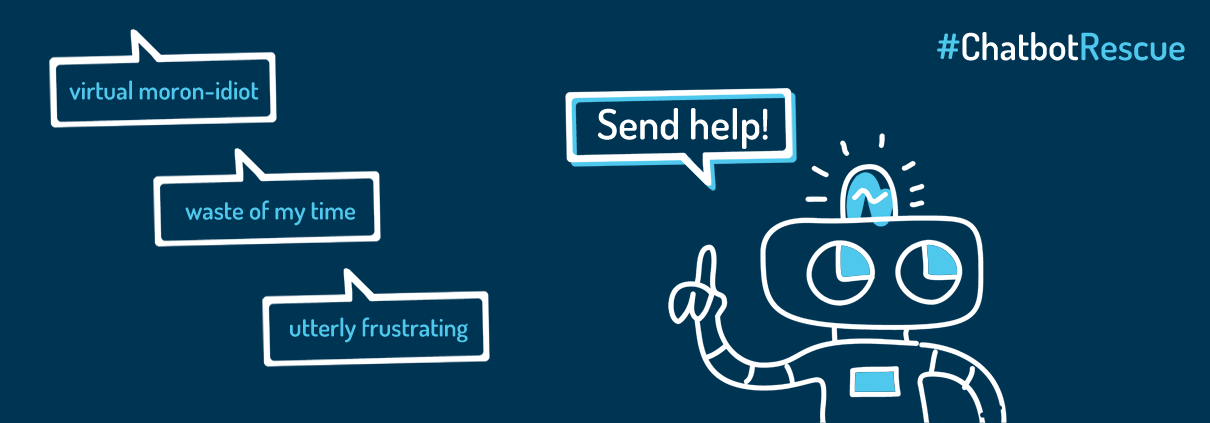
Fast forward a few years, and the chatbot and virtual agent landscape is now littered with poor-performing implementations and failed projects. In some cases, these failing projects have garnered negative press for companies. Telecommunications company Telstra was in the news when their virtual agent Codi was branded a ‘virtual moron-idiot’ by customers for failing to answer even basic questions. The National Disability Insurance Agency (NDIA), a government agency in Australia, was criticised for spending more than $3.5 million AUD on a chatbot project that never even reached the testing stage. In other cases, enterprises are struggling behind the scenes with internal chatbot projects. It’s not unusual to find companies with more than 10 projects in progress, but none of them delivering on their potential.
This is a common theme in organisations around the world. Yet, it’s not all doom and gloom for the industry. While there are many chatbot and virtual agent projects failing or never coming to fruition, there are also lots of highly successful implementations that have been in place for years. For example, at Creative Virtual our very first enterprise customer is still a customer today – that’s over 15 years of consistently delivering successful virtual agent solutions for them. So why do some chatbot projects fail while others achieve long-term success? There are two main pieces to the puzzle – the technology and the people.
As with any other product or technology, not all chatbot and virtual agent solutions are created equal. Here are just a few of the common problems enterprises are encountering because they don’t have the right virtual agent technology in place:
- Channel-specific solutions – While providing 24/7 self-service on one channel can be a great way to get started with a chatbot, organisations are discovering that technology designed only for one channel is now creating a disjointed experience for customers because the tool can’t be linked up with any other channels. These companies are struggling with the challenge of having yet another siloed tool to maintain that makes it harder to deliver a seamless, omnichannel customer experience.
- ‘Dumb’ solutions – Basic chatbot solutions are designed to do just that – have basic interactions. Organisations using these platforms are struggling to create unstructured conversation flows and deliver intelligent self-service that can help users solve issues using natural language. Without options to integrate with existing content sources, other support options and account information, simple chatbot solutions don’t allow for the easy, personalised experience users want. They also don’t have the right combination of machine learning and human input on the backend to help them continually improve in a reliable way.
- Tough-to-grow solutions – Some enterprises thought their chatbot was on-track until they tried to grow their solution. Not all platforms give organisations the ability to scale their chatbot to other touchpoints, to support millions of users, to expand into other business areas, to link the contact centre to digital channels, to meet specific security and hosting requirements, to control the amount of machine learning and human input used – the list goes on and on. A self-service tool that can’t grow with the company won’t deliver long-term success.
- DIY solutions – Lots of companies jumped at the chance to build their own chatbot only to discover that they don’t have the experience, know-how and data to create a tool that will meet their customer and/or employee engagement goals.
That last issue is just part of the reason why people are the other main ingredient for a successful chatbot implementation. As I mentioned in my Conversational AI interview, I truly believe that the key to a successful chatbot/virtual agent/conversational AI strategy is to work with an experienced team of people. There are lots of confusing options and challenges in the industry today, and enterprises need to be smart about the choices they make. Organisations need to work with an experienced partner that can help guide them in creating and implementing a chatbot strategy that will work today and also set them up for future innovation and expansion.
Often chatbot projects fail because the organisation isn’t working with a vendor that can provide consultation experience as well as the right technology. It’s important to work with a team that will collaborate closely to design a customised solution and provide guidance on both sector-specific and general industry best practices. This expertise needs to go beyond the initial implementation process to include experience in ongoing development and optimisation. New start-ups typically can’t provide that type of insight and support, and most organisations don’t have that expertise internally.
The good news for enterprises struggling with poor performing chatbots and projects that never got off the ground is that there are options for getting their projects back on track. Instead of abandoning these projects, they can save their investments by leveraging what they already have and building on that to create a successful chatbot by upgrading to the right platform. As someone who has been involved with this technology since its infancy, I’m passionate about helping these organisations save their investments. The expert team at Creative Virtual and I know intimately how well this technology can work for enterprises and don’t want them to continue to miss out on those benefits.
If your organisation is struggling with a chatbot or virtual agent project, I encourage you to reach out to learn more about Creative Virtual’s Chatbot Rescue Mission.
If your organisation hasn’t started out on your conversational AI journey yet but is worried about selecting, deploying and maintaining a successful solution, I recommend downloading these Top Tips for Implementing a Chatbot or Virtual Agent in 2019.