
As artificial intelligence moves from experimental model training to commercial deployment at scale, the economics of enterprise AI are shifting toward inference. Training foundation models requires large, concentrated bursts of compute. Running real-time AI applications (generating text, executing code, processing streaming media) requires compute that is continuous, scalable, and responsive.
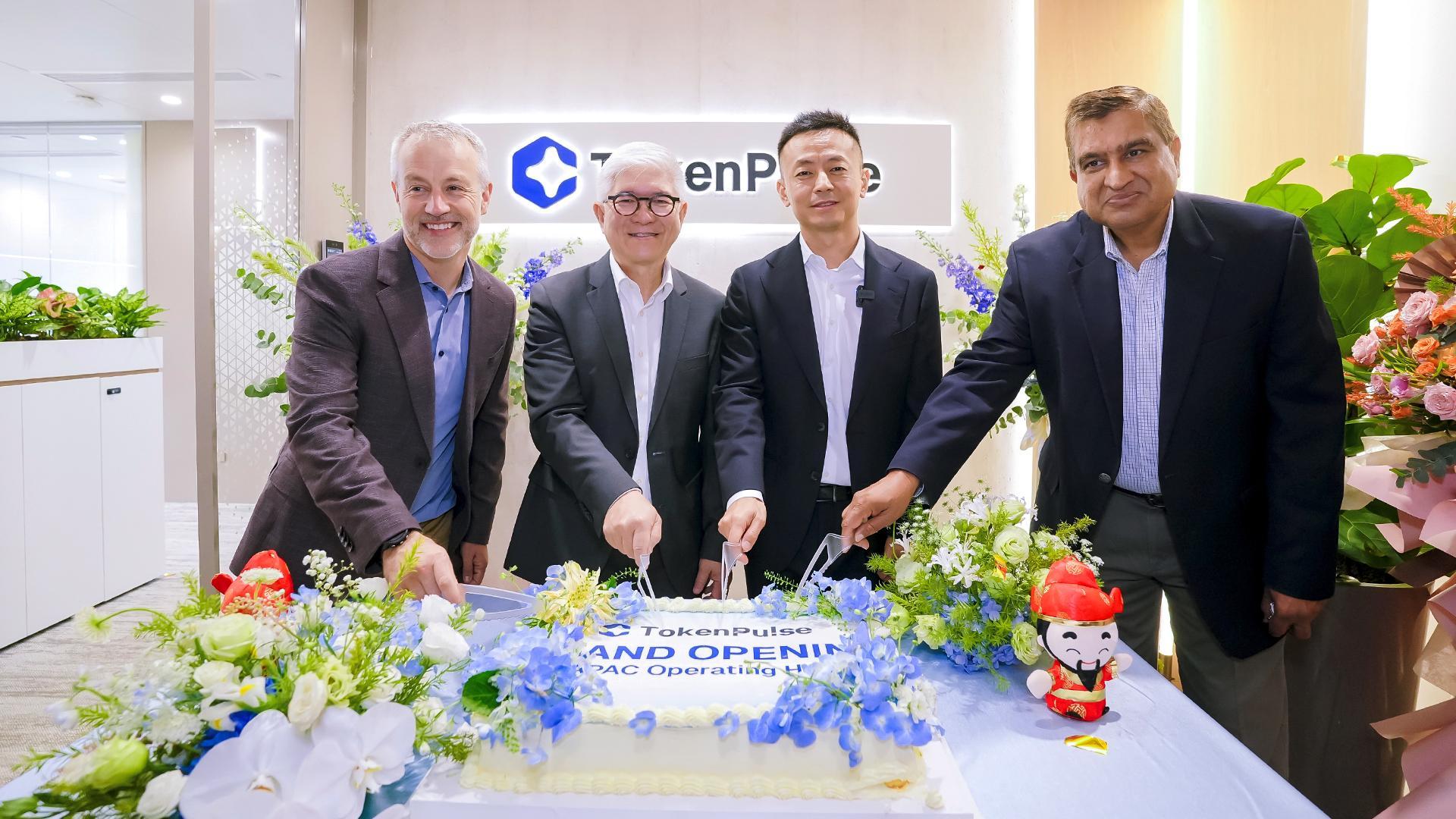
For enterprises and AI-native platforms, the commercial viability of AI products increasingly depends on two variables: cost per token and response latency. GPU operating costs, rising electricity demand, and network lag can all erode application margins. Against this backdrop, AI inference infrastructure company TokenPulse has set up its Asia-Pacific operational and strategic hub in Singapore, which the company describes as its co-headquarters alongside San Francisco.
According to TokenPulse, the Singapore hub is intended to be more than a regional office. The company says it will serve as the strategic center for its Asia-Pacific operations and as the coordination point for its inference delivery network, linking North America's AI technology, customer, and capital ecosystems with Southeast Asia's growing data-center and energy resources. TokenPulse says it is building capacity across North America, Asia-Pacific, and Europe at the same time.
Image source: TokenPulse
Why Inference Is the New Battleground for AI Margins
Every interaction with an AI agent, recommendation engine, or enterprise copilot triggers inference requests. Unlike static cloud hosting, inference workloads are dynamic, hard to predict, and compute-intensive. As adoption grows, software providers face rising costs simply to sustain real-time token generation.
Serving inference efficiently takes more than buying hardware. It calls for an infrastructure strategy that brings together physical data centers, affordable power, GPU utilization tuning, and request routing. Without effective orchestration, capacity either sits idle and burns capital, or becomes a bottleneck during demand spikes, which raises latency and degrades the user experience.
Singapore's Role: A Constrained Market That Coordinates a Region
Singapore's place in AI infrastructure is shaped as much by its limits as by its strengths. The city-state is one of Asia's most established data-center and interconnection markets, with dense subsea-cable landings, a deep financial sector, and a predictable regulatory environment. It is also short of land and power. After pausing new data-center approvals in 2019, the government has since allowed new capacity only selectively, with an emphasis on energy efficiency and greener power.
These constraints have pushed much of the region's new data-center construction across the border, notably into Johor in Malaysia and the Batam area in Indonesia, while Singapore remains the place where many operators base their management, commercial, and network functions. Closer cooperation between Singapore and Malaysia, including the Johor–Singapore Special Economic Zone, reinforces that pattern.
For inference providers, this division of labor matters. Large, power-hungry clusters can sit where land and electricity are more readily available, while the commercial relationships, interconnection, and latency-sensitive delivery are anchored in Singapore. TokenPulse's strategy is a bet on that model.
Infrastructure Economics: Coordinating the Southeast Asian Compute Corridor
TokenPulse positions Singapore at the center of its regional infrastructure architecture, as a coordination gateway to data-center corridors in Southeast Asia, including Malaysia, Indonesia, and Thailand.
The economic case, as the company describes it, does not rest on running low-cost server halls in Singapore itself, where land and power are at a premium. Instead, Singapore provides the regulatory maturity, financial connectivity, and network infrastructure needed to manage compute clusters located in neighboring markets:
Cross-Border Resource Deployment: TokenPulse says it orchestrates compute capacity across markets where power generation, industrial land, and renewable energy are more available and cost-effective.
System-Wide Cost per Token Reduction: By pairing regional compute hosting with its own inference optimization software, TokenPulse says it aims to raise GPU utilization and lower the overall operating cost of delivering each token.
Customer Proximity: Low-Latency Delivery for APAC Enterprises
While back-end compute clusters can take advantage of regional land and power, front-end delivery has to stay responsive. Singapore's position as a major global telecommunications and subsea-cable hub places TokenPulse close to fast-growing enterprise and AI-native markets across Asia-Pacific.
According to TokenPulse, its routing framework evaluates incoming inference requests in real time, assessing current cluster loads and latency requirements and directing each query to the most suitable regional compute node.
The company says that by avoiding unnecessary cross-continental data transit between Asia and cloud clusters in the US and Europe, the platform reduces round-trip network lag, which matters for interactive conversational AI, automated customer agents, and real-time vision applications.
Leadership and Ecosystem Integration
Running a cross-border AI inference infrastructure strategy requires familiarity with regional energy markets, real-estate partnerships, and regulatory frameworks.
TokenPulse's leadership team has experience spanning AI infrastructure, cloud computing, and global operations. CEO Steven Zhou is described by the company as a serial entrepreneur with more than 20 years of experience building businesses across the US and Asia.
The company's chairman, Thomas Pang, brings more than 30 years of executive experience across government, investment, and corporate leadership, according to TokenPulse. He spent more than two decades with Keppel, including serving as CEO of Keppel's Data Centres & Networks Division from 2014 to 2024, and now guides TokenPulse's regional partnerships and ecosystem integration.
TokenPulse says this background supports its ability to bring together international capital, regional utility operators, and enterprise technology clients.
Long-Term Commitment to the Regional AI Ecosystem
TokenPulse describes its Singapore presence as a long-term anchor within Southeast Asia's digital infrastructure ecosystem. Its stated approach combines distributed compute facilities with centralized routing and inference acceleration, with the goal of cost-effective, scalable AI operations.
"Singapore is a natural choice for building our APAC operating hub, given its mature data center ecosystem, strong network connectivity and deep talent pool," said Thomas Pang, Chairman of TokenPulse. "Our foundations are rooted in decades of experience across data centers, networking and cloud computing. Drawing on that experience in building and operating infrastructure at scale, we will continue investing in compute capacity and ecosystem support, delivering the best performance at the lowest cost per token."
Whether that model delivers will depend on factors common to every inference provider in the region: access to power and GPUs, the pace of new data-center approvals across Southeast Asia, and enterprise demand for low-latency AI services in Asia-Pacific.
About TokenPulse
TokenPulse is an AI inference infrastructure company headquartered in San Francisco and Singapore. The company combines GPU infrastructure, an inference engine, and global AI infrastructure capabilities to provide compute for foundation model companies, AI platforms, enterprises, and AI-native applications.
With Serverless, On-Demand, and Reserved consumption models, TokenPulse lets customers start with API-based inference and move to dedicated GPU capacity as their workloads grow, without replatforming.
Learn more: www.tokenpulse.com