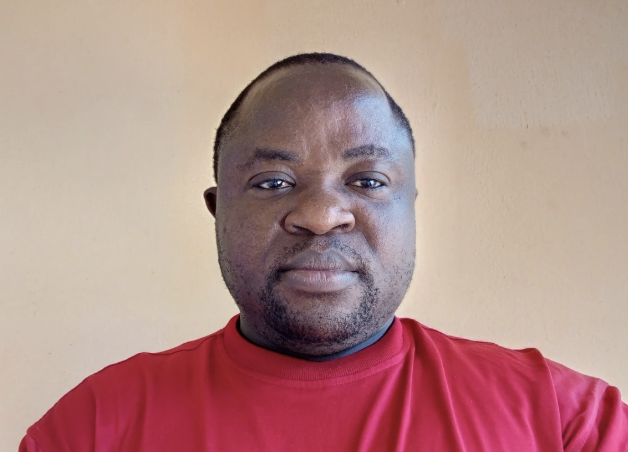

From automated parking systems to anti-fraud solutions, this international AI expert is transforming multiple industries with innovative machine-learning applications while mentoring the next generation of tech talent
As artificial intelligence continues to transform industries worldwide, Central Asian businesses are increasingly adopting AI-powered automation to stay competitive in the global market. According to an IDC report, AI could contribute up to $19.9 trillion to the global economy by 2030, accounting for 3.5% of the world's GDP (elpais.com). One international expert applying these technologies is Abylaikhan Azamatov, who has implemented AI solutions across Japan, UAE, Russia, and Kazakhstan. His computer vision and machine learning work has improved business processes across multiple sectors.
From developer to AI innovator
Azamatov's journey into artificial intelligence began with a solid foundation in information technology. After graduating with honors from the International Information Technology University, he explored innovative projects, including "Robotai," a robotic system designed to harvest apples efficiently. Azamatov quickly transitioned into software development, working as a Backend Python Developer in Moscow, where he integrated machine learning models into server systems.
Those early projects gave Azamatov invaluable insights into how AI solutions could be effectively implemented within existing infrastructures. He soon recognized that the most powerful applications weren't necessarily the most complex but those that solved real business problems efficiently.
This practical approach to technology led Azamatov to specialize in financial technology, where he developed credit scoring models for Bank Center Credit, one of Kazakhstan's major financial institutions, and anti-fraud systems for Kaspi Bank, Kazakhstan's leading digital bank. His anti-fraud system for monitoring legal entity operations reduced fraud levels by 25%, demonstrating the tangible impact of his work.
Pioneering computer vision solutions
Azamatov's expertise truly became prominent during his time at Parqour, where he developed an automated parking system that increased vehicle recognition speed by 30%. The solution, which combined YOLO (You Only Look Once, a real-time object detection algorithm) for detection and a custom CNN (Convolutional Neural Network) for recognition, was successfully implemented in over 50 facilities.
The parking automation project had to overcome significant challenges, including extreme weather conditions and variable lighting that could affect recognition accuracy. Despite these obstacles, the system maintained high performance levels, leading to presentations before government officials for implementing innovative parking solutions in major urban areas.
At ARK in Moscow, Azamatov continued advancing computer vision applications by automating merchandising processes, which improved forecasting accuracy by 15% and reduced image analysis processing time by 20%. These achievements demonstrated his ability to optimize complex algorithms for practical business applications.
International experience and expertise
Azamatov's technical prowess is complemented by extensive international experience. Working as an ML Engineer at Nexus Fronttech in Japan, he participated in more than 10 outsourcing projects, achieving up to 95% model accuracy improvements. This experience gave him valuable insights into optimizing models for devices with limited resources.
"Working in different countries taught me how to adapt solutions to varying market requirements and cultural contexts," Azamatov notes. "The technical challenges might be similar, but implementation approaches need to be customized based on local business environments."
His work extended to the UAE, where he served as an AI advisor for KPI, helping launch a marketplace startup by optimizing business processes and technological infrastructure. As an AI Engineer for Latoken, a cryptocurrency exchange, he developed AI solutions to protect the platform from automated bots, significantly enhancing security measures.
Regional Differences in Technical Infrastructure
Based on his cross-market experience, Azamatov describes how technical approaches for AI implementation varied dramatically across the four regions where he worked. In some emerging markets, he encountered limited internet stability that forced his teams to deploy local servers and perform calculations on-site, reducing dependency on cloud solutions. His projects often used NVIDIA GTX instead of more expensive RTX models, requiring careful price balancing against performance in server configurations.
Azamatov found that the Middle East presented a stark contrast with its robust network infrastructure, enabling hybrid architectures that combined local processing with cloud storage and analytics without bandwidth limitations.
"Clients could afford high-performance servers with GPU acceleration or specialized NVIDIA Jetson modules," he notes, which allowed his teams to implement more complex and resource-intensive models without compromises.
During his time in Japan, Azamatov observed that the technological landscape demanded extremely high data quality standards and accuracy requirements. His projects there emphasized meticulous quality control, advanced model implementation, and deep integration with IoT systems to achieve superior automation and reliability. Meanwhile, in his UAE projects, Azamatov prioritized cloud-based, scalable solutions that could integrate with government registries for rapid data processing and high-level automation.
Financial Technologies: From Traditional Banking to Cryptocurrency
Azamatov's experience in both traditional banking and cryptocurrency sectors revealed contrasts in technological approaches. For his anti-fraud system at Kaspi Bank, he worked within a monolithic or classical microservices architecture constrained by strict regulatory requirements and mandatory auditing.
Azamatov's banking projects operated within a highly regulated environment, requiring strict KYC and AML compliance. They were developed using conservative technology stacks, including Java,.NET, and established SQL databases.
By contrast, his security implementation for the Latoken cryptocurrency exchange employed a flexible microservice architecture with frequent updates and blockchain integration. "Development followed agile methodology with short testing cycles and rapid implementation of changes," Azamatov points out. While regulatory processes were less formalized, they maintained high transparency requirements and security for blockchain operations. His technology stack relied heavily on open-source components, microservices in Golang and Python, and advanced blockchain technologies.
Current projects and future vision
Azamatov has extensive experience as a Chief Language Models Expert at Freedom Finance Bank, where he developed a Telegram bot based on GPT that provides recommendations to clients. The bot integrates with the bank's super-application, which includes brokerage services and third-party services.
"The future of artificial intelligence isn't just about implementing cutting-edge technologies," Azamatov emphasizes. "It's about creating solutions that address our specific economic and social needs while developing local talent to compete globally."
Educational contribution and social impact
Azamatov has shared his expertise by teaching at an online programming school where more than 100 students completed courses. He's also participated in initiatives supporting children from low-income families by organizing educational programs in IT and programming.
"My mission is to advance the field of artificial intelligence by nurturing a new generation of technical specialists and fostering innovative approaches to problem-solving," says Azamatov. "I believe we can drive technological progress through education, supporting talented engineers, and promoting forward-thinking methodologies in AI development."
His cross-market experience has provided him with unique insights into global best practices while demonstrating the importance of adapting solutions to specific business environments and technological contexts.