

As businesses increasingly migrate to cloud infrastructures, security risks have surged alongside their expansion. A 2023 IBM report revealed that data breaches have increased by 15% over the past year, largely driven by misconfigurations and vulnerabilities in cloud environments. In response, organizations are now prioritizing cloud security strategies, with automation and zero-trust models becoming integral to safeguarding sensitive data.
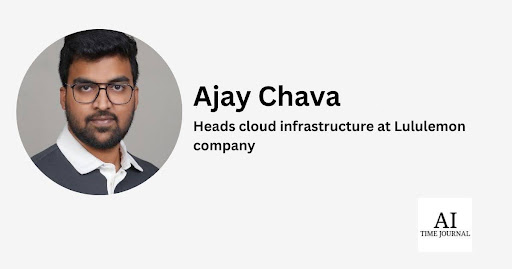
Amid this industry shift, leaders like Ajay Chava, who heads cloud infrastructure at Lululemon company, are implementing cutting-edge security practices to ensure both scalability and resilience in the cloud. He sat with English Jagran to discuss all the details related to his work and the industry. As far as we know, Mr. Chava's achievements have been widely recognized, including his recent success in the Cases and Faces competition.
Mr. Chava, how has the rise in cloud adoption changed the way organizations approach security?
The cloud has been a game changer for businesses in terms of scalability and flexibility, but it’s also opened up a whole new range of security challenges. With more applications and data moving online, the attack surface is larger, and the potential risks are higher. At Lululemon, we’ve shifted our focus to automation and minimizing access vulnerabilities through strategies like least privilege access control.
Could you share an example of a project where your team’s security automation efforts helped reduce risks significantly?
One of the most significant security challenges my team faced was mitigating over-privileged access within our Kubernetes environments and the HashiCorp Vault Secret Management Tool, particularly concerning our AWS resources access management to the systems running inside Kubernetes. We discovered that many applications had excessive permissions, which expanded the blast radius — the potential scope of damage in the event of a security breach. This posed a substantial risk of unauthorized access and data exfiltration.
To address this issue, I implemented the OpenID Connect (OIDC) IAM Roles for Service Accounts (IRSA) approach, effectively enforcing the Principle of Least Privilege (PoLP). By automating and streamlining permissions, we ensured that each application had access only to the resources it needed. For example, if five applications required read access to AWS databases, we configured permissions so that each application could access only its specific database and nothing more. This strategy drastically reduced the blast radius. If a bad actor compromised one application, their ability to move laterally and access other systems or databases was severely limited. They couldn’t infiltrate additional AWS databases or steal customer data. Through this proactive approach, we successfully reduced security risks by 80% and eliminated the potential for unauthorized access.
We extended these practices to the HashiCorp Vault Secrets Management Tool by clearly delineating access controls for human users and systems. Systems were granted access solely to the secrets they required, while DevOps personnel like myself maintained full access to manage the lifecycle of these secrets. Developers had their privileges limited to read-only, as DevOps managed access on their behalf. This segregation of duties and strict access control further minimized the blast radius and enhanced our overall security posture.
What impact did your initiative to re-architect Eficens Systems’ network infrastructure with Private Address Space have on cloud security?
Reassessing Eficens Systems’ network infrastructure by implementing Private Address Space had a profound impact on our cloud security. One of the most significant outcomes was a substantial enhancement in risk management. By minimizing our exposure to the public internet—a major vulnerability in cloud setups — I significantly reduced the attack surface. This was crucial because I had identified a major security vulnerability involving publicly exposed security groups, which posed a real and immediate threat to our system’s integrity.
I led the initiative to reevaluate our network architecture, specifically focusing on EKS ingress rules and leveraging Private Address Space to safeguard our infrastructure. This strategic move resulted in an 80% reduction in security risks and the elimination of unauthorized access—one of my proudest achievements. Additionally, by integrating automation into our security protocols, I improved our ability to respond to potential threats rapidly without extensive manual intervention. This initiative not only fortified our defenses but also strengthened our internal controls over how data is accessed and managed.
As far as we know, your recent success in the Cases and Faces competition has put a spotlight on your work. Can you share more about your involvement in this competition?
The Cases and Faces competition is an esteemed platform that recognizes excellence across various industries, and I was honored to be part of it this year. The event emphasizes innovation, technology, and impactful contributions to the industry. My participation involved judging submissions in the categories of Achievement in Technology Innovation, Technology Executive of the Year, and Achievement in Engineering. This required a deep evaluation of over 50 applications, where I assessed projects for their originality, sustainability, and impact. The experience was incredibly rewarding, as it allowed me to engage with groundbreaking ideas and contribute to promoting innovation in the tech industry. Being recognized as a jury member also reinforced my commitment to advancing cloud infrastructure security and resilience.
How do you see cloud security evolving in the next few years? What role will automation play?
Automation is going to continue playing a central role in cloud security. The future is moving toward self-healing and self-securing systems, where cloud environments can automatically adjust their security settings in real-time based on detected threats. Tools like Datadog will be crucial, as they allow organizations to monitor and secure their cloud environments at scale, without overwhelming their teams with manual processes.
What advice would you give to organizations struggling with cloud security today?
To strengthen cloud security, the first and most crucial step is embracing automation across security processes. Manual tasks inherently carry a high risk of human error, which can lead to serious vulnerabilities. Automating access controls enforces the Principle of Least Privilege (PoLP) consistently, reducing the likelihood of unauthorized access. At Eficens Systems, we implemented PoLP across our tools, such as AWS and HashiCorp Vault, to ensure that each application and user only has access to the resources they need, significantly reducing our attack surface.
Investing in comprehensive observability tools is also essential for proactive security. Real-time insights into infrastructure health and activity allow organizations to detect anomalies before they become threats. Tools like Datadog provide deep visibility into metrics and traces, enabling us to anticipate issues and streamline incident response. For organizations starting, it's important to implement tools that integrate well across the tech stack and can scale with the business's security needs.
Equally important is ensuring cross-functional alignment on security protocols. Security isn't solely the responsibility of the IT or security teams; it's an organization-wide effort. Educate and train all teams on security best practices and make security a fundamental part of the organizational culture. Many breaches occur due to gaps in communication or unclear responsibility boundaries, so clear policies and shared ownership are essential. In cloud security, vigilance and collaboration are just as critical as the tools themselves.
How has this shift toward automation impacted your teams at Eficens Systems?
The shift toward automation has had a transformative impact on our teams at Eficens Systems. By automating many routine security tasks, we’ve significantly increased operational efficiency and freed our engineers to focus on more strategic initiatives. Previously, a considerable amount of time was spent manually securing our environments—a time-consuming effort that automation has now streamlined. With systems in place to handle repetitive tasks, we’ve reduced the potential for human error, accelerated threat detection, and improved our overall response time to vulnerabilities.
As a result, our engineers are now able to dedicate their time to optimizing performance, scaling our infrastructure, and developing advanced security measures, which directly contribute to our company’s innovation and growth. This approach has not only elevated team productivity but also strengthened our security posture by enabling a proactive, rather than reactive, strategy.
Finally, what has been the most rewarding part of implementing these security measures?
The most rewarding part of implementing these security measures has been witnessing the transformation in our risk posture and the increased resilience of our cloud infrastructure. Knowing that we've significantly reduced vulnerabilities and minimized the potential for breaches instills a deep sense of confidence across the team. It's gratifying to see that our proactive approach not only safeguards our systems but also enables greater scalability and operational efficiency. Watching our security framework evolve and seeing the tangible impacts both in terms of reduced incidents and stronger internal controls has been incredibly fulfilling and reinforces the value of a strong, collaborative security culture.