
Employee training has become a key element of companies' competitiveness during the global digital transformation. According to research published by Vorecol, organizations that actively implement digital Learning Management Systems (LMS) improve their productivity by 20-25%.
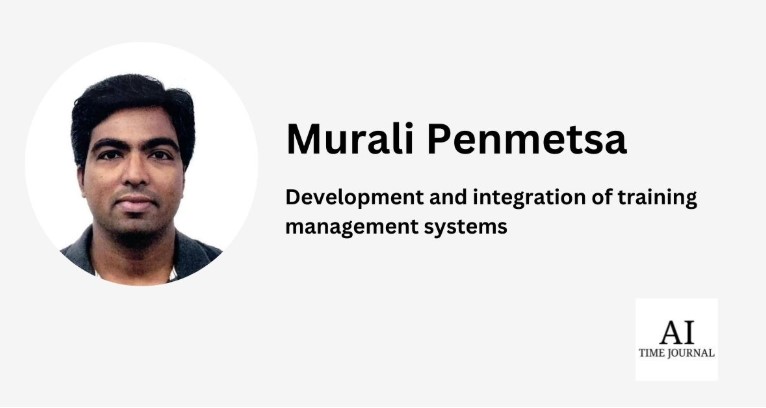
However, implementing and managing LMS at a global level comes with numerous challenges: from adapting to different languages and cultures to meeting local regulatory requirements. Here, experts like Murali Krishna Raju Penmetsha come to the rescue. With over 18 years of experience in the development and integration of training management systems for the world's largest organizations, his expertise includes the deployment of LMS in 81 countries and the creation of solutions tailored to the pharmaceutical industry. We spoke with Mr. Penmetsha about current industry trends and the future of technologies.
Murali, your experience in implementing LMS across 81 countries with adaptation for over 20 regions and language groups is impressive. How do you ensure effective learning in such diverse cultural contexts?
The main challenge is creating a truly functional system that takes into account the cultural characteristics of each region. When we talk about global companies, it's not enough just to translate content into different languages. It’s necessary to adapt it to the local context and consider the specifics of how information is perceived in different cultures while maintaining unified corporate standards.
Here’s an example: while working with a major pharmaceutical giant, we found that employees in Asian branches preferred a more structured approach to training with clear instructions, whereas in European offices, exploration and independent problem-solving worked better. We created an adaptive system that adjusts to these differences while maintaining consistent quality standards.
You have worked extensively with well-known companies, such as Capgemini America and Charles River Laboratories where regulatory compliance plays a crucial role. How does LMS help such organizations cope with these challenges?
LMS systems allow organizations to automate employee training, ensuring compliance with current regulatory standards such as GxP (Good Practice Guidelines and Regulations). These standards encompass various areas, including Good Manufacturing Practice (GMP), Good Laboratory Practice (GLP), and Good Clinical Practice (GCP), and are critical in ensuring product quality, safety, and data integrity in highly regulated industries like pharmaceuticals.
By integrating LMS with other systems, such as EDMS (Electronic Document Management System), our solution ensured that employees could access the latest Standard Operating Procedures (SOPs) and complete required training on time. For example, in one project, the integration automated notifications for regulatory changes and assigned mandatory training sessions for relevant employees. This approach significantly reduced the risk of non-compliance by maintaining accurate training records and ensuring consistent knowledge across the team.
Moreover, our system included robust tracking and reporting tools, allowing companies to audit training completion rates and measure the effectiveness of compliance programs. This comprehensive approach not only improved team preparedness but also built confidence during regulatory inspections, where adherence to GxP is often scrutinized.
Your experience integrating EDMS (Electronic Document Management System) with LMS for CSL Seqirus companies covered over 5,000 employees. How did you achieve this scale, and what benefits did it bring to the business?
EDMS-LMS integration is far more than just a technical project. In the pharmaceutical industry, where compliance is critically important, such integration becomes a breakthrough in ensuring quality work.
We created a system that automatically notifies employees about changes in Standard Operating Procedures (SOPs) and immediately provides access to necessary training. As a result, the time required to implement new procedures was reduced by 40%, and the number of errors decreased by 30%. More importantly, the system allows tracking not only training completion but also practical application of the knowledge gained.
Under your leadership at Luxottica Retail North America, the implementation of Tier-3 infrastructure support for SuccessFactors LMS significantly improved system stability, achieving nearly 100% availability even during peak loads and reducing response times by 40%. Could you explain what Tier-3 infrastructure entails and what steps were taken to achieve such results?
Tier-3 infrastructure refers to a highly reliable and redundant system design that minimizes downtime and ensures consistent performance. It includes features like multiple power and network connections, failover mechanisms, and proactive system monitoring to handle both planned and unexpected disruptions.
In this project, we conducted a thorough audit of the existing infrastructure to identify bottlenecks and areas for improvement. Our team optimized API (Application Programming Interface) connector configurations to ensure seamless communication between system components and implemented a proactive monitoring system to address potential issues before they could affect users.
Additionally, we developed custom reports tailored to the specific needs of the organization, enabling detailed insights into training progress and compliance metrics. These customizations enhanced decision-making and streamlined the monitoring of regulatory adherence across global teams.
These measures not only enhanced system stability but also reduced response times by 40%, giving businesses faster access to training materials. This directly improved the user experience, minimized frustration, and increased learning efficiency. The high availability of nearly 100% meant that employees could rely on the system at all times, even during peak periods, which is critical for global organizations with distributed teams.
Your reporting solutions for SAP SuccessFactors (Plateau) revolutionized LMS reporting with real-time compliance metrics and actionable insights. How did these solutions impact compliance rates and decision-making processes?
The reporting tools I developed allowed clients to monitor regulatory compliance in real time, significantly reducing the risk of non-compliance during audits. For instance, in a pharmaceutical company, implementing these reports increased compliance rates by 25% and reduced error correction costs by 15%. These tools also enabled leadership to make quicker, data-driven decisions based on precise and up-to-date information.
You developed custom reports using SuccessFactors LMS PRD/BIRT, bridging gaps between standard LMS tools and complex compliance demands. What features of these reports address compliance challenges?
My reports stand out for their adaptability and depth of analysis. They provide not only data on training completion but also metrics for the practical application of knowledge. For example, in one project, we integrated metrics tracking how employees applied their training to workflows. This allowed clients to focus on tangible learning outcomes rather than just formal metrics.
Your custom reports also improved efficiency, reduced compliance risks, and enhanced decision-making. How did they impact operational strategies and regulatory adherence?
After implementing these reports, companies gained a better understanding of where their employees needed additional training. This led to a 30% reduction in the average time required to prepare for new product launches. In a pharmaceutical company, this effect translated into significant time savings, enabling the company to save millions of dollars by accelerating drug launches.
Developing SOPs (Standard Operating Procedures) and WIs (Work Instructions) for global IT teams managing LMS platforms reduced ticket resolution times by 20% and enhanced audit readiness. What challenges did you face aligning these procedures with ITIL standards and global regulations?
The biggest challenge was aligning a unified framework that accounted for the diversity of local requirements across 81 countries. We encountered differences in regulatory norms and management approaches. To overcome these challenges, I conducted a series of workshops with local and global teams to ensure their engagement. The final system reduced ticket resolution times by 20% and simplified international audit processes.
What advice would you give to companies just starting their journey of digital transformation in corporate learning?
The key is not to perceive LMS as just a technological solution. It is primarily a tool for business transformation. Start by clearly defining business goals and success metrics. Involve not only IT specialists but also representatives of business units in the implementation process. And remember, even the most advanced system won't work without the right change management strategy and executive support.