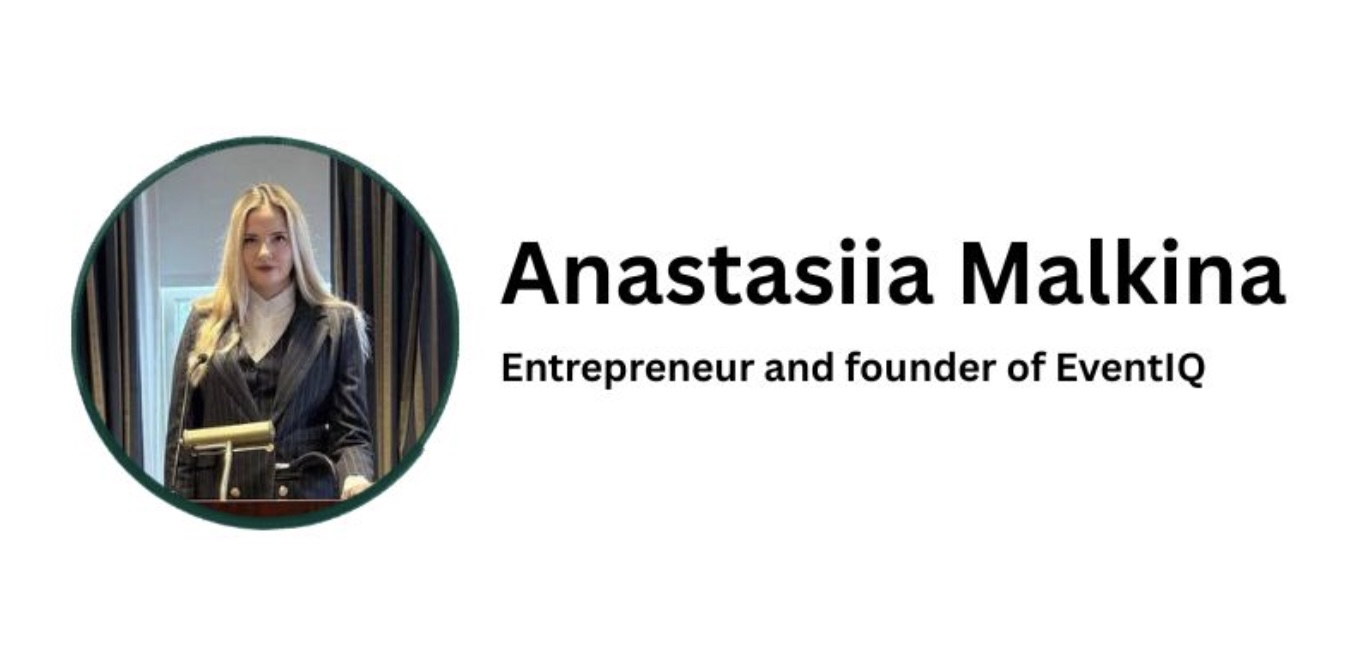

In this interview, we sit down with Arunsingh Jeyasingh Jacob, a Senior Solutions Architect at Amazon Web Services, to explore his 15-year journey through the evolving landscape of cloud and AI. From his first lessons in customer empathy to today’s challenges of integrating generative AI, Arunsingh offers a grounded perspective on the human side of innovation. He unpacks how strategic clarity drives architecture, why simplicity still matters in cloud design, and what advice he gives to the next generation. Read on for insights that blend technical depth with practical wisdom.
Discover more interviews here: Adina Suciu, Co-CEO at Accesa — Digital Transformation, Evolving Leadership, Future Trends, Innovation through Collaboration, and Strategic Growth
With only a headset and a router, your path into tech began to unfold. How has that early experience shaped your approach to enterprise-level cloud architecture today?
This question always brings me back to a moment that has stuck with me for years. Early in my career, I received a support call from an incredibly frustrated customer. The customer had been passed from one representative to another and landed on my line as her last hope. The issue was relatively simple; there was a static IP configured on her desktop that needed to be removed. But what stayed with me wasn’t the fix itself; it was what happened next. The customer was so relieved and wrote a heartfelt letter to our company’s headquarters praising the support experience. That moment taught me something powerful: the ripple effect of truly caring for just one customer. It shaped my entire philosophy.
Even now, while working on Enterprise Cloud and AI solutions, I start with the same mindset. When you truly care about the person on the other side, whether it’s a single user or a global enterprise, solutions become more meaningful, and innovation becomes more human. That lesson, learned with a headset and a router, still drives me today.
As a Senior Solutions Architect, you bridge the gap between business strategy and technical implementation. Can you walk us through what that looks like?
Absolutely. In today’s fast-paced world, we are constantly flooded with new information and tools. It’s easy to get overwhelmed. What I have learned is that real impact starts with clarity. Before any technical decision is made, the first step is to revisit the Why. Why does this problem matter? Who does it impact? What value are we trying to unlock? Once the purpose is clear and aligned across business and technical stakeholders, everything else becomes more focused. The technology stack, the design patterns, and even the project roadmap all flow naturally from that strategic clarity. Without it, even the best technical solution can miss the mark. So, in essence, being fluent in both business and tech is less about translating, it is about integrating. When strategy and implementation move in sync, that’s when momentum builds, and results follow.
Over the years, how have you seen cloud architectures evolve, and what advice would you give to teams trying to build on the cloud?
Well, that’s a loaded question. Let me try to break it down. Initially, things were simple: “Let me move this workload to a virtual machine in the cloud.” That was it. As that pattern became more common, microservices emerged, i.e., breaking applications into modular, independently deployable pieces. Then came serverless computing, which took things a step further by removing the need to manage infrastructure at all, letting teams focus purely on code. Alongside this, practices like Infrastructure as Code and DevOps automation became standard. As systems grew more complex, disaster recovery and chaos engineering became critical to ensure resilience under failure. Today, cloud architecture is both more powerful and, in some ways, more simplified thanks to the abstractions. And now, with AI becoming more deeply integrated into workflows, we may be shifting from automation to intelligence.
So, my advice to teams building in the cloud is to start simple, design for failure, automate everything, and prioritize observability and security from day one.
You have mentioned the shift from automation to intelligence. What defines this transition?
Let’s pause for a moment and consider the historical context. Human evolution is fascinating. Once we were hunters and gatherers, and today we have food delivered to our doorstep with a tap. But it wasn’t one breakthrough that brought us here. It was layers of technology, built one on top of another. For example, take the internet, which connects people. Then smartphones came along and took that connection to a whole new level through Apps. Automation had a similar trajectory. Initially, it was about reducing repetitive work. Practices like DevOps helped automate deployments, create consistent environments with immutable code. Even cloud operations matured to an extent of detailed monitoring/observability, self-healing systems that operated based on predefined rules.
But now, we’re entering a phase of automation with intelligence. This is where systems don’t just execute tasks, they reason, adapt, and act. With AI, we can now progress beyond predefined templates and scripts. It’s not just a technological shift; it’s also a mindset change.
Gen AI is the next big technology on everyone’s radar; how do you help people make sense of it beyond the headlines?
Many companies have been leveraging AI for years through use cases like anomaly detection, forecasting, prediction, object detection, and more. Traditional AI has delivered value, but often required specialized expertise, custom models, and longer development cycles. Generative AI has dramatically reduced the barriers to getting started. By providing pre-trained foundation models accessible through APIs, it has empowered developers, product teams, and engineers to build intelligent applications much faster and with far less overhead. You no longer need to build from scratch now, you can integrate advanced capabilities like natural language processing, content generation, and summarization into products in days rather than months.
To move past the hype, the focus should be on what Gen AI enables practically, i.e., creative work, making sense of large amounts of data, improving how people interact with products using chat or voice, and speeding up how quickly new ideas turn into real solutions. For companies, this means identifying where your customers will benefit the most, whether it’s faster service, more personalized experiences, or smarter tools that make their lives easier.
You have been mentoring the next generation of talent. What advice do you consistently give to those aiming to enter cloud and AI roles today?
Recognize what you’re good at and focus on amplifying it. If you are an excellent public speaker but work primarily in coding, seek out opportunities that allow you to further develop that strength. Don’t hide your talents just because your current role doesn’t require them. Today’s generation has access to incredible tools, platforms, and knowledge, all of which can accelerate growth. So, stay curious and keep honing what you are great at.
Second, learn the business. For example, if you are a software developer, take time to understand what the product team does, how marketing functions, and how sales operate. Schedule 1:1s with people outside your immediate circle. That broader context gives you a valuable perspective, and perspective opens doors. It helps you connect the dots between your work, strengths, and the impact it has across the company.
Lastly, find a mentor, someone whose career path you admire, whether it’s a Director, VP, or a peer a few steps ahead of you. Reach out, ask questions, and learn from their journey. Mentorship isn’t just about receiving guidance, it’s about seeing what’s possible and building a roadmap to get there. It can truly change everything.
Finally, when you reflect on your 15-year journey, what has remained constant in your philosophy, no matter how much the tech landscape has evolved?
Two things have never changed for me. First, being extremely customer-focused. Whether it’s a support call or a large-scale cloud architecture solution, if you stay close to your customer’s needs, you will always find the right solution.
Second, put on the strategy hat. It’s easy, especially in technical roles, to jump straight into solution mode as soon as you hear a problem. But I have learned that pausing, asking the right questions, and digging into the problem often reveals a much simpler, more elegant path forward. Long-term thinking leads to sustainable innovation.